Read or Jump On
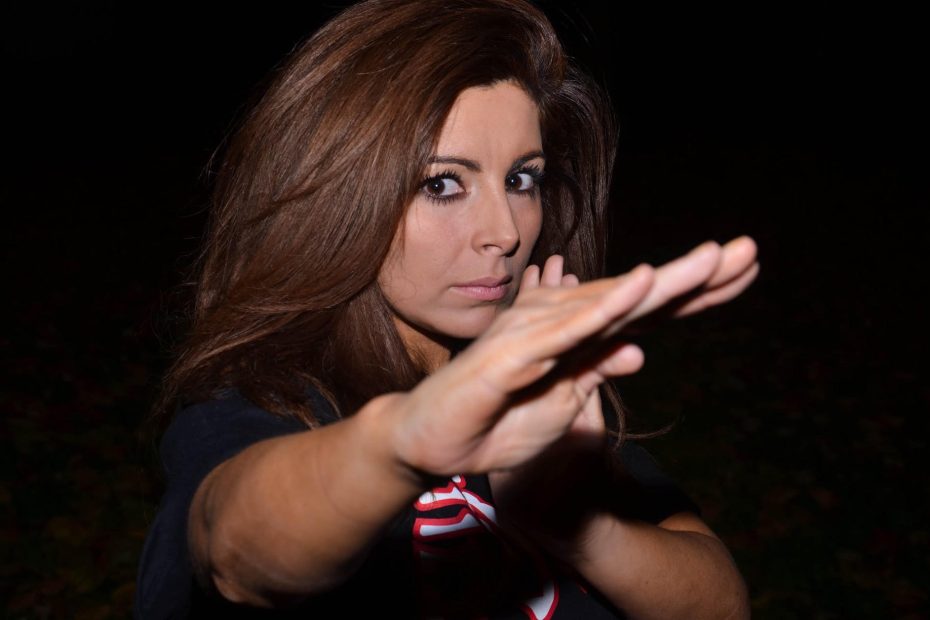
Sifu Della O'Sullivan Fight Like a Girl
Preface
A few months ago on the Instagram profile of Sifu Mark Stas, founder of the WingFlow system, I saw the promo for the book “Fight like a girl” and thought it would be interesting to contact Sifu Della O’Sullivan, I wasn’t wrong :-)
It is not easy to meet a female Sifu and get a chance to know the female point of view on the subject.
I also wanted to ask her questions that may seem provocative, I try to bring realistic testimonies back to the blog.
Self-defense is a generally controversial topic that becomes even more critical when it touches the female world.
I believe that teaching real combat is not an easy thing to do, especially working with women who by nature are not predisposed to combat and violence.
Proposing courses that are too realistic might turn people away; conversely, a course that is too light would not be useful.
Having the opinion of an experienced person is of great value, especially in this case being the respondent herself a woman.
Sifu Della’s availability and generosity has provided me with a wealth of information which for ease of reading I have divided into two articles.
In the first article, after a quick introduction of Sifu Della O’Sullivan and Wing Tsun we will look at practical aspects and defence techniques as well as the effects on our nervous system.
The second article will focus more on the psychological aspects. We will see practical tips and get to know Sifu Della
Introduzione
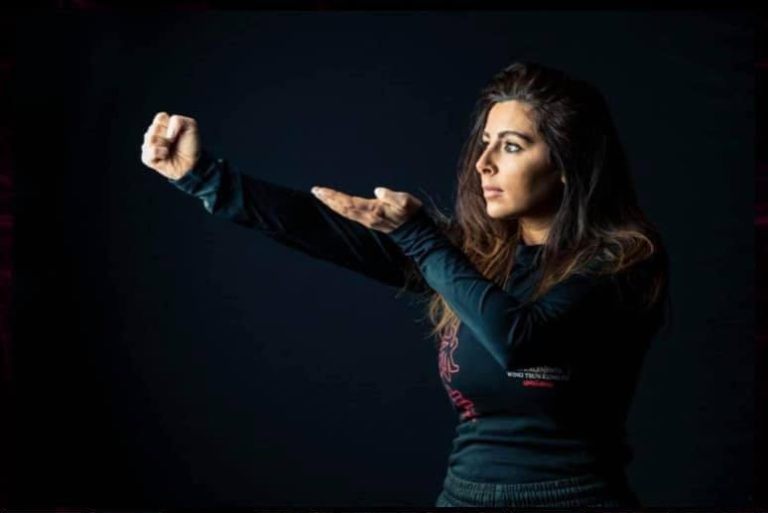
Sifu Della O’Sullivan, intro
As a matter of practice, I think a quick introduction of my guest is appropriate; more details about Sifu Della O’Sullivan will be given at the end of the article.
I must say that Sifu Della was very transparent and candid in providing even intimate and personal information related to her background.
Sifu Della has an 18-year career in martial arts and her discipline is Wing Tsun.
She has always loved martial arts. Her brother and father were martial artists under Sensei George Andrews of Okinwan Traditional Goju-ryu Karate who also taught her when she was a child, so her passion began.
The past and rebirth
In the past out of fear she avoided certain areas of London altogether and had terrible panic attacks because for several years she was the victim of harassment, stalking, and violence.
In her life she experienced physical violence to the point where she knew what it felt like to think she might die.
At first these experiences hindered her martial path but later the same experiences gave her a different perspective on what to expect physically and psychologically from a real altercation or assault and how the nervous system responds.
She experienced coaches who give false hope because of a lack of realism.
As a result of her experiences, as well as much research and work alongside a local domestic violence service, Sifu Della created “Fight like a girl,” a self-defense program for women and girls.
Stats
Statistically, 30% of women aged 15 and older have experienced physical and/or sexual and nonsexual violence at least once in their lives.
So let’s see her perspective on how to deal with the world of Self Defense


Wing Tsun
Let us begin with a brief introduction and analysis on Wing Tsun.
Wing Chun or Wing Tsun? Martial arts non-experts may wonder what the correct name of this Kung Fu discipline is.
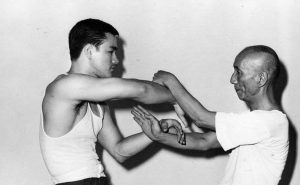
‘Wing Chun’ is the name of the style of Kung-Fu taught by the late Grandmaster Yip Man, made famous by Sijo Bruce Lee.
Wing Tsun, on the other hand, is the evolution of Wing Chun. Created by Grandmaster Leung Ting, the last student of Ip Man (the main branch is in the EWTO founded by Prof. Dr. Keith Kernspecht’s).
This style is distinguished by the incorporation of scientific principles, including physics and biomechanics, into its fighting strategies.
I personally had the pleasure of training in Germany with the huge EWTO community at a Seminar with Master Gokor Chivichyan
History of Wing Chun/Wing Tsun
Legend has it that Wing Tsun was conceived by a woman, a Buddhist nun. NgMui allegedly created a fighting style particularly ideal for women. Sifu Della do you think this is correct?
I don’t know if this legend is really true, but I sure hope it is.
I learned that Ng Mui was the Buddhist nun who founded WT that her and 4 other elders escaped the Siu Lim monastery. They pooled their knowledge to create a new style. Then they dispersed and she had alleged influence in the founding of a few other styles. Later she met a young woman called Yim Wing Chun who was being forced into marriage, she was a 15-year-old girl. Ng Mui taught her and used her knowledge to specifically help a 15 year old girl defeat a village warlord.
If this is true it would make sense why Wing Tsun is the way it is and evolved from there. But I don’t think it matters too much if it is true as I have seen how small females can use this practically, I have taught 100’s of 15 year old girls and its very useful to them.
Self-defense, the most suitable art
When talking about self-defense today, the media campaign often brings to mind Krav Maga and Wing Tsun.
Sifu Della you have practiced various styles of martial arts and today you have the level of Wing Tsun Master.
Do you think there is one martial art more suitable for self-defense than others? Why?
I have seen people train very practical, very aggressive styles and they totally work for them. Some people need to develop more of a fighting spirit and aggression, but some peoples aggression is too high (like I mentioned earlier), it makes them impulsive, difficult to reason with, and a danger to themselves and others. Their overreaction to violence is just as much a problem as the underreaction.
Wing Tsun
I think on paper Wing Tsun is the most scientific, practical style I have come across that can universally help anyone. It has the balance of the practical and scientific physical aspect, it covers topics that are from the streets – like multiple attackers, weapons defence, an attacker of any size or gender, how to utilise what you have around you to survive. But it also has the more philosophical side, and this is important to survival.
In Wt we have this saying:
with fight no mercy, with mercy no fight’
it essentially means that if we have to fight for our lives there is no space for mercy in the act of protecting ourselves. We must only think of our survival, but if there is space for mercy, where maybe the fight is over, the person is no longer a threat, or they are not a real threat physically then there is where we should be merciful.
This approach to defence reminded me of the fighter’s mentality Master Clod told us about, an article I recommend reading.
Women and Self-Defence
The effectiveness of a Martial Arts course
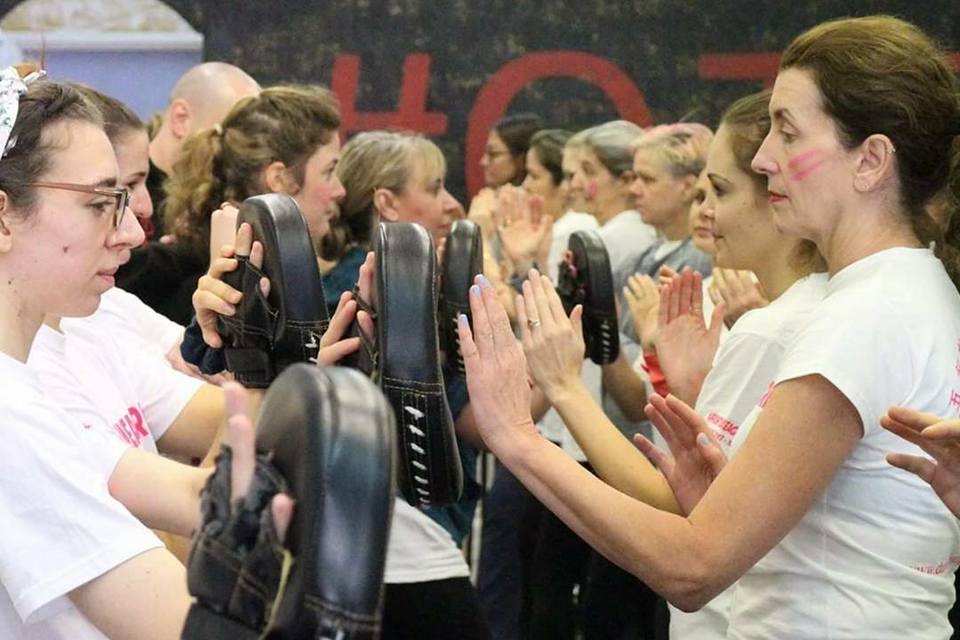
So many people today offer martial arts and self-defense courses and often promote themselves precisely through women’s defense courses.
We see on social media hundreds of videos that often propose unrealistic techniques.
What do you think makes an effective self-defense course?
Sifu Della talks about this already in her introduction, here on specific question she adds the following:
this is a long answer because I specialise in this area and there’s not just one thing to think about: it’s not just about teaching realistic techniques, it’s also about knowing when to introduce them and how to do it, as well as creating a space in which people feel comfortable letting the emotional charge pass through. It’s not easy.
Women and survivors, how to start
When it comes to teaching women and particularly working with survivors it’s important to first let them know that this is a safe space. I often let them know what I experienced when if first started training that I did get flash backs, it did make me feel uncomfortable and I nearly never came back because of it, but this is all part of the process. I also think it is NOT helpful to list statistics, as they are already there to learn and are already aware of the dangers, and sharing gruesome stories can bring up emotional charge that can leave the student feeling embarrassed. This is not avoiding as like I said they likely already aware. it’s just trying to keep the student in an empowered state and take steps to the grittier stuff.
I introduce things that allows them to see the practicality in a relatively comfortable type of attack so that they can build confidence.
Practical examples
For example, I will start with wrist grabs, not because I think it’s likely that someone will appear out of smoke and grab them by their wrists or that it’s the common attack. I teach it first because it allows them to try the movement ideas of disengaging, & gain confidence in breaking free from this type of hold and doesn’t draw up as much flash backs as other types of holds.
They can practice using the laws of physics and build up the tightness of the grabs, then we start to push and pull them with the same grab and teach them how to use the laws of motion and also combining strikes as a tactic to distract the attackers mind for a split second so that the disengage is likely not to be interrupted or noticed until it’s too late.
Advanced courses
Then once they are comfortable, we move up to elbows, body, throat, hair then floor. I have found the students (particularly survivors) respond far better with this method rather than jumping into the most dangerous and common type of attack.
So, I use techniques that introduce the ideas with low level threat attacks, and then build on them with higher level, and they are all built on through understanding of physics, kinetic energy and fighting principles (both strategic & psychological)
Of course, later they will need to try these things under pressure and learn how to respond when they are emotionally charged but we will never get there if they close up and don’t come back.
When I had those triggers I couldn’t hear or see anything I just froze up and my mind took me to another place.
Sticky hands
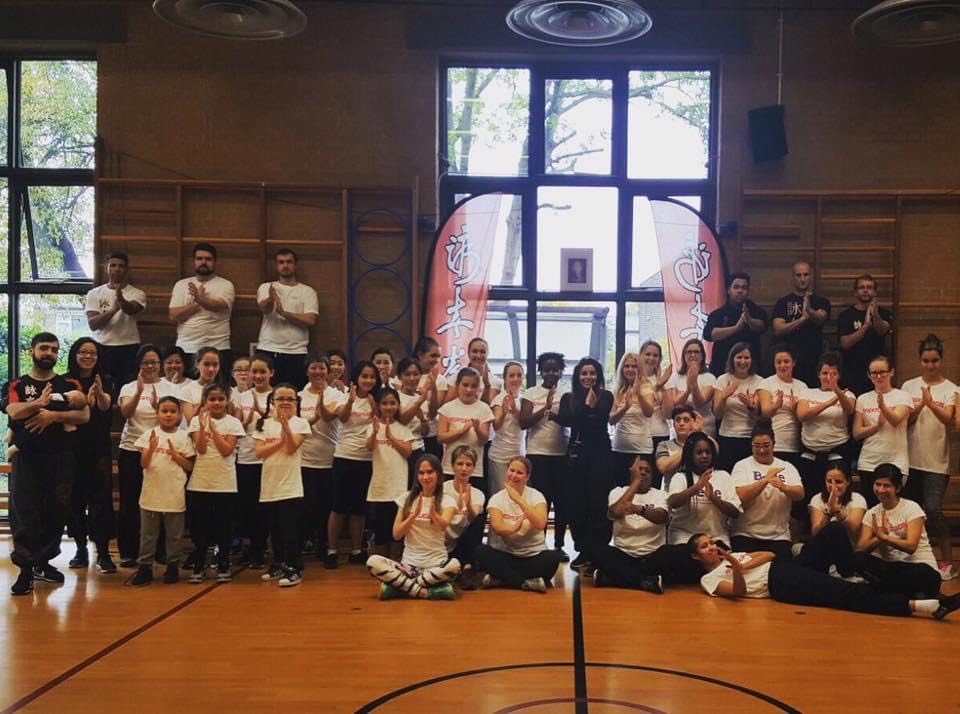
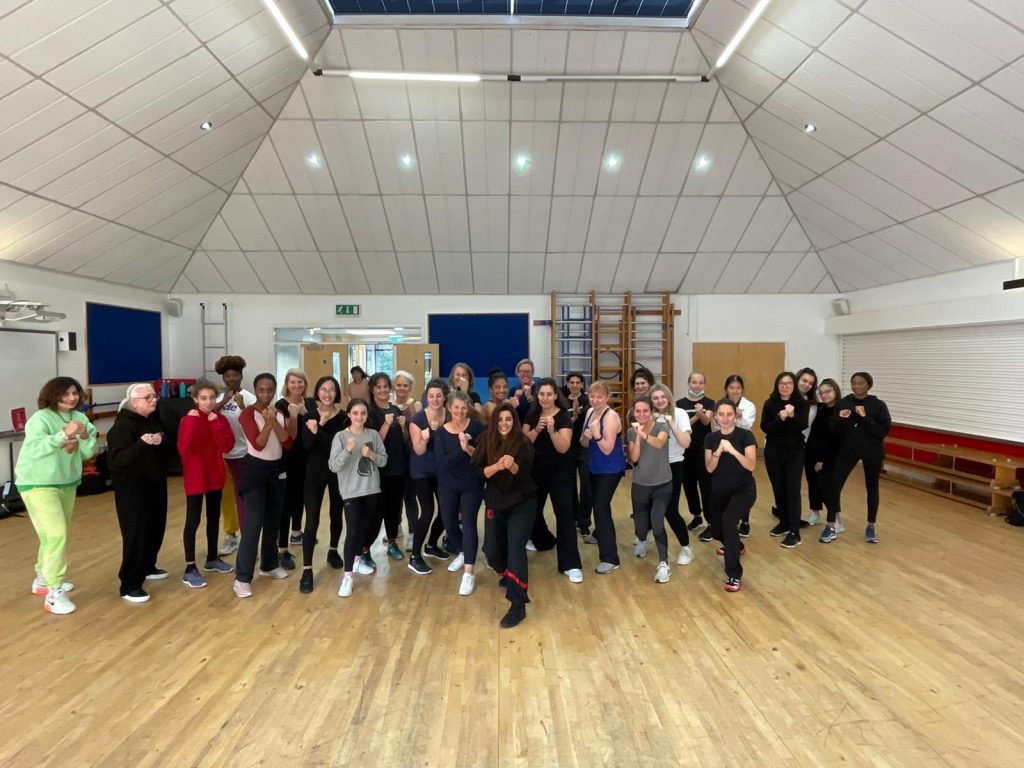
I find teaching sticky hand drills excellent for these courses. It actually retrains your nervous system and they get a good reflex and feeling and used to constant, they cannot think because their hands are in constant cycle of stimulus and becomes a type of moving meditation with a practical skill. The end result is that their hands and body move before conscious thought steps in. I realise this is likely why I loved chi-sao drills so much when I was a beginner.
Shock from aggression
Do you think it is correct to say that a woman easily goes into shock in case of an attack and especially in case she receives a blow/slap or is grabbed this creates a state of confusion of a few seconds that makes them easy victims?
Yes but Not only women: my study of a freeze/immobilised state concluded that this response to danger is the most elevated. Often people who have experienced domestic abuse as a child or adult are likely to go into this state. But not all as there are many factors into how and why our primal responses to danger differ.
This is because when your abuser is you’re care giver you learn to fawn (here I discovered that in English being a fawn is a verb meaning to try to win someone’s favour by flattering them), become smaller, quieter, & agreeable. Fawn is another type of response often to the build-up of a physical attack but when something happens suddenly it will be to freeze.
So those who often fawn or have an avoidant response when dealing with any form of confrontation will often also freeze.
Freezing
Freezing is the automatic nervous system going into an immobilised state, this often happens when we see there is not a likely outcome, like how a dear responds when I lion has caught it. It freezes in the hopes the lion gets bored and moves on because it knows it is prey. This is why we are likely to freeze when faced with someone or something who we know is an imminent threat to our lives. This is also why I think self-defence is so important to install confidence to know some tactics, strategies and moves that can indeed get you the hell out of there.
Two-sided coin
But interestingly having an elevated response to danger is a two-sided coin, some peoples elevated response would be to fight but without self-control. I have taught people who have had this response and they too need to learn to regulate their nervous system so that they can respond to a threat with more composure and clarity of thought… otherwise they could very easily end up breaking the law. (Self-Defence laws in Uk is that the force must be reasonable and proportionate. This is also true in other countries, as we have seen here).
Self-defence, the main techniques
What are the main techniques to know for self-defence?
- introductory disengaging techniques such as anti-hand, arm, & body grab
- anti grappling
- strike defence
- choke defences
- how to use strikes combined with above (I teach strikes as a tactic to get out of a hold, or create time and space to get away)
Self-defence, the role of ground fighting
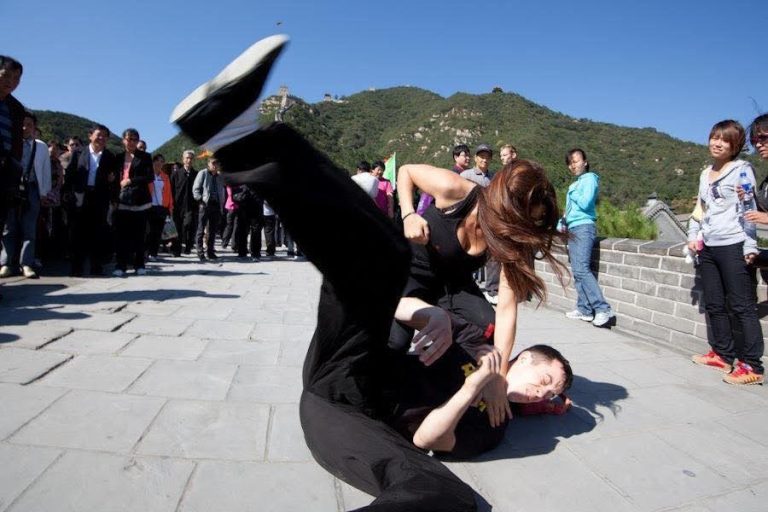
Women are often sexually assaulted and this entails the risk of being on the ground.
How important is it to know about ground fighting?
I never learned anything about anti-grappling until I was 7 years into my career… in my opinion it is a must to teach in my courses.
Athletic training
How important is athletic preparation in self-defence?
I think it’s important to encourage people to improve their general fitness in case they need to run and just for overall health benefits. But self-defence courses are usually short and there is no time to develop that in them unless you have some months to work with students, and the reality is most people who attend these are not the athletic types, they are everyday civilians. I have taught students with disabilities, women and men in their 70s, people who have health conditions that means they cannot do any cardio vascular training, and its often been because of those hindrances they already feel vulnerable.
Self-defence, defending against a knife
I read that you are a weapons expert. How do you defend yourself against a person armed with a knife?
This topic is one of my favourites but it’s not easy. The risk of failure is much higher vs someone armed when you are unarmed for obvious reasons.
I have learned a weapons defence program which I feel is very affective. I have modified it recently as my knowledge and skills grow.
I also grew up in Peckham in south east London and I have seen people stabbed, I have seen what it actually looks like and it’s not how most demonstrate it.
However, we must start somewhere with simple drills and exercises
Necessary skills
Ultimately to be efficient in weapons defence in my opinion you need a combination of skills I will name a few:
- to be a strategist and use what is around you or with you to aid you, so I teach how to use everyday objects as an equaliser or distraction to then find an opening to gain control
- have a knockout punch or strike so that when you do bridge control of the weapon hand you take out the general controlling it too (do not just wrestle the knife)
- have had sufficient unarmed combat skills first
- excellent & explosive footwork
- a willingness to do anything and everything needed to survive.
I recommend reading this interesting article on carrying a knife
Pepper spray
The use of pepper spray as a weapon of defence is often promoted. What is your point of view? Do you think it is a real solution for women who have no combat training?
pepper spray is illegal in the UK but of course anything that impacts a persons ability to see makes the task to get to safety much easier.
Pre-Conclusion
A very interesting article on Self-Defence, not only for women, and its method of teaching.
I have tried to leave her answers in their original form to give more emphasis and reality to the text.
In this first part I introduced Sifu Della O’Sullivan and we talked about what Wing Tsun is.
We looked at the practical aspects of self-defence.
Sifu Della, thanks to her experience, shared the method she uses for teaching self-defence to women but especially to survivors, people who have suffered violence and therefore have to overcome the shock/trauma.
In the second part with Sifu Della we will address the psychological aspects and the way of facing the challenges and events that life offers us.
In addition, Sifu Della will provide us with a series of strategies, tactics and tips.