Read or Jump On
Athletic training. Objectives
Athletic Training!
I know this is a Personal Defence blog so I should talk about how to deal with an attack and how to defend yourself. Obviously this is the main theme of the Blog and the topic is dealt with in the specific sections but as mentioned on the Blog introduction page: I think there is no good martial artist without good training behind them.
My experience
I learnt to my cost that training for martial arts requires a complete involvement of one’s body. In 2005 I attended my first camp with Luca Marinello and at the end of the three days of training I was unable to walk. The experience of training with the Fragale school as well as reading about Bruce Lee had taught me the importance of athletic preparation so I always devoted time to this. During the camp period, in addition to Ju-Jitsu, I used to train in the gym and considered myself sufficiently trained. I did weight sessions, although my programme at that time was geared towards strength, and bag training. Nevertheless, in those three days the work was so intense and exhaustive that by the end I felt like a wreck, I was aching muscles that I hardly knew.
If you think about competitive martial artists, in addition to working on technique they devote a lot of space to athletic preparation.
Athletic preparation in Personal Defence
Martial arts require physical strength, a rock-hard, elastic body. A strong, explosive physique will respond quickly to what is presented in front of it.
Physical fitness should not be underestimated, as it will help you sustain more hours of technical training, not the other way around.
To overcome an opponent you must have courage, technique, strength and luck. For the latter there is little we can do apart from being prepared, which is the primary purpose of this blog in the Personal Defence section; for technique, your Master and constant training will take care of that; for adequate physical preparation you need commitment and a good programme.
I believe, as a consequence of the above, that if you want to be able to handle an attack you must have a basic physical preparation, because fighting requires physical commitment and, even just to be able to put into practice the first rule of good defence, you need legs and breath to run ;-) as well as to be able to handle combat stress.
Physical preparation does not mean being a professional athlete or having the physique of a model but having the basis for a responsive, snappy, elastic physique.
Let’s not forget that the best defence is surprise, and if with your skills you can surprise the attacker and secure yourself, you’re done.
These are the reasons why I wanted to put a section on keeping fit in the blog.
Athletic Training. Objectives
Objectives of basic athletic preparation should be:
- Improving aerobic function
- Improving endurance
- Improving the core
- Improve balance
- Improve explosive strength
- Improve speed or reaction speed
- Improve hitting power
- Improve elasticity and flexibility
Aerobic functions:
Aerobic Training
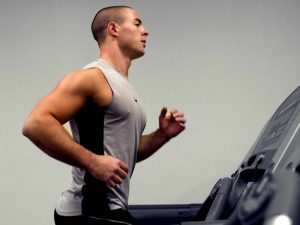
Aerobic training refers to all exercises that stimulate the heart and respiratory rate to supply the muscles with oxygenated blood.
Let’s see what the benefits of aerobic training are:
Constant training trains the heart to be stronger and more efficient in circulating blood.
A strong and efficient heart is what is needed to live a long and healthy life.
Aerobic training can reduce the stiffness of the arteries, thus reducing the strain on the heart. When performing aerobic exercise, the heart rate increases and more blood is pushed into the arteries.
Aerobic exercise affects the vascular system by promoting capillary growth. From a functional point of view, capillaries are the most important part of the vascular system. Their task is to ensure metabolic and respiratory exchanges between the blood and intercellular fluid.
Along with cardiovascular adaptation, aerobic exercise also influences the system of energy production by the muscles. Not only does the body burn fat during exercise, but this mechanism can continue for hours afterwards.
With more ‘fat-burning’ cells, aerobic training increases your basal metabolic rate, which results in burning more calories each day.
In addition to the cardiovascular and metabolic systems, muscles are also able to adapt to aerobic exercise, leading to improved physical endurance.
Anaerobic Training
Training in martial arts also means alternating between aerobic and anaerobic work, which, unlike the former, requires an intense, but short duration of effort and in between exercises it is necessary to allow oneself a moment of rest, i.e. activities during which the physique is brought close to the limit of its strength or speed.
Anaerobic training is strength training that requires more effort on the part of the athlete and the goal is muscle strengthening. Anaerobic exercises increase the power of the exerted muscles, strengthen tendons, bones, ligaments and joints. Finally, anaerobic training improves heart activity and also reduces the risk of injury caused by muscle weakness.
Caution: anaerobic activity should be performed with caution when you are older or have health problems. If you are inexperienced, it is always best to perform it with a personal trainer who is capable of dosing the effort for optimal performance.
Endurance
Endurance training is training that progressively overloads muscles to promote muscle strength, power, anaerobic endurance and muscle size.
Resistance training aims to make your muscles more efficient.
By training your muscles, you not only increase your strength and power, but also your basal metabolic rate, thus improving your body composition and health.
Resistance training increases energy expenditure, differently and to a lesser extent than aerobic training.
Resistance training is essential for staying fit as you age
Il core
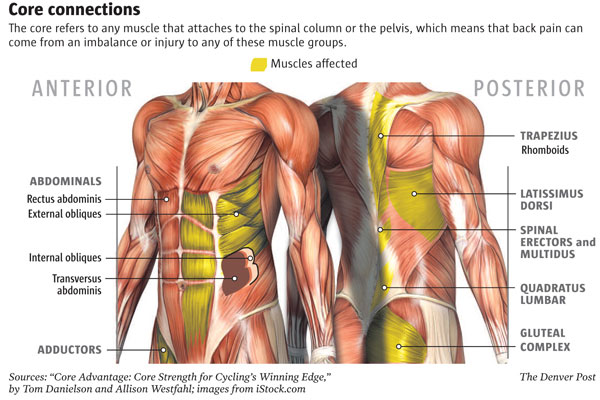
Core means the ‘core of the body’.
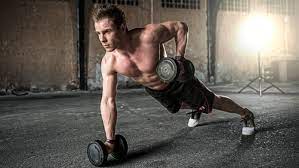
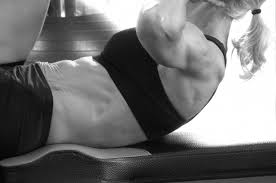
Considerable importance is attached to the core as it greatly influences posture, and it is believed that most functional movements of the entire body, including athletic and sporting gestures, originate from it.
A trained and powerful core is conducive to any daily activity, from simple sitting to lifting heavy loads.
The core is a natural internal belt formed by the fascia that includes the abdomen, diaphragm, pelvic floor and back.
Having a strong core brings countless benefits including:
- reduces the risk of injury
- improves fitness and athletic performance
- improves everyday motor coordination
- optimises strength, mobility and precision of the kinetic chains and muscles of the entire body
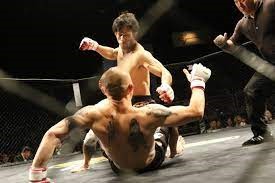
A strong and toned chest belt helps us withstand blows and increases our striking power
Balance
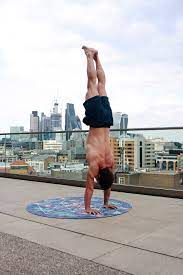
Balance is an often underestimated skill, but it is a fundamental ability for everyone, as much in everyday life as in physical activity.
Practising balance exercises is very useful for athletes. In fact, this type of training allows you to have more control over your body while doing sports, improving stability, coordination and ease of movement. This also allows you to perform certain types of movement more correctly.
Training balance improves the quality of movement in everyday life; improves sports performance; activates the cognitive system as it allows the muscles to cooperate with the Central Nervous System.
Explosive power
This is the ability of our neuromuscular system to express high force in the shortest possible time.
Speed or rapidity of reaction
That is, improving the ability to react to a stimulus in the shortest possible time.
Speed is the ability to perform movements in the shortest possible time.
Two types of speed can be distinguished:
Reaction speed: is the ability to transform external stimuli into movement, through an action or movement of the body or parts of it.
Translational speed: understood as the space travelled in the unit of time.
The power of strokes
While force refers to a maximum load an athlete can lift, power represents the speed with which that force is exerted.
In physics, power indicates the ability to perform work in a period of time; (average) power is defined as the ratio between the work performed and the duration of the time interval in which it is performed. The formula for calculating power is as follows:
Power = Force / Time
In more practical terms, power indicates the work that a physical system is able to perform in one second and therefore expresses how quickly a certain work is performed (power will be greater the faster a work is performed). If we consider that space / time (l / t) is the expression of speed (V), we could rewrite the power formula as follows: P = F x l / t or more simply
P = F x V.
From the formula P = F x V, we can deduce what athletic characteristics need to be trained to improve sports performance. In fact, to increase power we can act on both strength and speed, two characteristics that we analysed earlier.
Which means that by training strength and speed we also improve the power of our strokes
Elasticity and flexibility
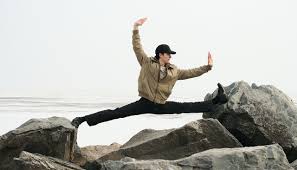
Flexibility, elasticity and joint mobility are often used as synonyms, when they are not.
There is a significant difference between joint mobility and muscle flexibility.
To work on the muscular apparatus simply stretches it. On the contrary, the joint follows other laws and responds better to circumferential and wide movements than to constant stretching over time.
Combined joint flexibility and joint mobility exercises are usually the most appropriate choice.
Being as flexible as possible is indispensable for performing even the smallest daily actions.
Flexible and elastic are often used as synonyms in stretching when in fact a muscle can be flexible but not elastic, and vice versa.
- The first characteristic indicates a muscle’s ability to relax and stretch.
- Elasticity, on the other hand, indicates the ability to stretch and return to its original size as quickly as possible.
Depending on one’s objective, it may be necessary to train more of one or more of the other.
Training. Fundamental principles
It is important to define the core principles of training responsible for continuous and lasting progress:
Continuity
In order for training to generate the appropriate stress on the body, it is essential that it is continuous over time to generate progression in athletic ability. It is important to bear in mind that athletic ability tends to regress quickly, especially with increasing age, which is another reason why training must be continuous
Progressiveness
Progression in athletic ability and capacity is related to progressiveness in workloads. This is why training must be progressively increasing in difficulty in proportion to the skills achieved
Specificity
Specificity refers to two aspects in particular:
- Adaptation of intensity and quantity of work to the person’s characteristics
- Specificity relating to the characteristics of the discipline practised
Complete training will also include methods that are not too specific, more general, but these will be used in a marginal percentage.
Alternation of loads
As seen from all the skills listed above, combat sports are complete, which is why it is important to alternate training loads in order to involve all the various components.
Variation of exercises
It is appropriate to vary by giving new interests and new stimuli
Programming
This principle is at the basis of the athlete’s continuous progress, avoiding injuries as much as possible and favouring the attainment of optimum psycho-physical conditions.
To do this requires a lot of practice and experience
Conclusions
Personally, I have always promoted my courses by explaining that a good martial arts course gives you the chance to keep fit while learning something useful to defend yourself, so for the principle of optimisation, a good martial arts training has a twofold result.
Just think of the first two points listed in this article: aerobic function and endurance
- Aerobic training improves the cardiorespiratory system, maintains heart health and keeps the energy metabolism working
- Resistance training has cardiovascular benefits; its main function is to gain muscle mass and efficiency.
The articles that follow are intended to be a guideline for improving one’s athletic characteristics.
However, I would like to emphasise that when starting an athletic training programme, it is important to take your physical condition and any personal problems into consideration.
Training must be gradual and if you have no experience in training, do not stop at reading an article on the web but entrust it to a professional trainer who will know how to plan your training in the most appropriate manner
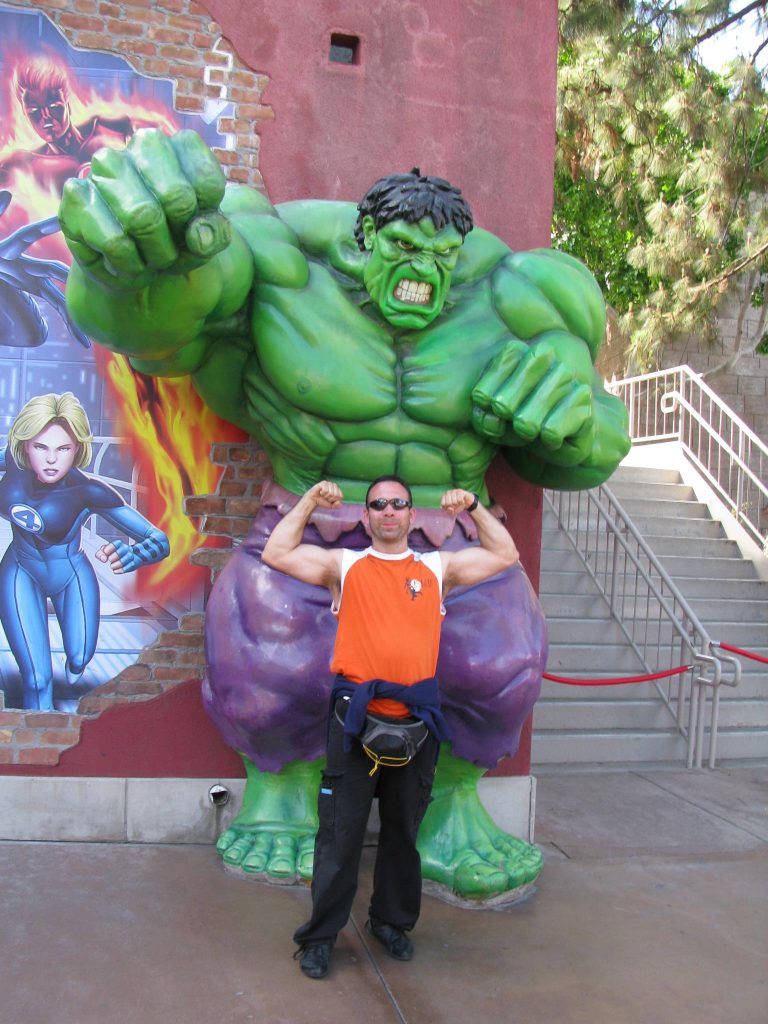
2008 joking with the Hulk in Hollywood – L.A.
Bibliographic references
Inbodyitalia.it: What Aerobic and Resistance Exercise Do For Your Health
projectinvictus.it: Flessibile o elastico? Mobilità articolare o allungamento muscolare?
sportsperformancebulletin.com: Flexibility and stretching: the science behind the importance of keeping flexible
my-personaltrainer.it: Core: Cos’è, Come si Allena e Benefici
health.harvard.edu: The real-world benefits of strengthening your core
Preparazione atletica negli Sport di Combattimento e nella arti marziali – Luca Martorelli – ed. Hoepli