


Read or Jump On
Training for longevity: strength, variety and martial arts to remain functional over time
No longer being very young and suffering from a few aches and pains, I never miss an opportunity to study suitable training methods, and the Internet is a great help in this regard because, if used intelligently, you can learn interesting things.
This is how I found the inspiration for this new article.
The real goal is not the mirror, but to remain strong and functional over time
In the world of fitness, people almost always talk about immediate results, but few talk about longevity.
Lean physiques, performances to post on Instagram, “definitive” programmes that promise miracles in a few weeks. Everything revolves around the present, or at most the next month.
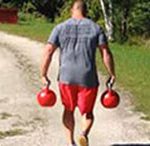
But what if training were first and foremost a long-term investment?
Just look around: thirty-year-olds with chronic back pain, frozen shoulders, knees that creak more than those who have been squatting for twenty years. At that point, the question arises:
how can we not only improve today, but slow down the inevitable decline and maintain good physical function throughout our lives?
In recent years, research has begun to provide very clear answers. And, interestingly, they all point in the same direction: less extremism, more balance, more variety.
When we truly begin to ‘age’ physically
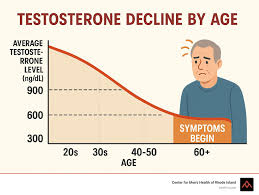
One of the most interesting studies on the subject is the Swedish SPAF (Swedish Physical Activity and Fitness) project, which followed over 400 people aged between 16 and 63.
We are not talking about comparisons between different generations, but about the same people observed for almost 50 years.
The results are quite clear:
- aerobic capacity peaks between the ages of 26 and 36
- muscle power (vertical jump) peaks around the age of 27 in men and even earlier in women
- muscle endurance is at its best in the first half of the 30s
After these peaks, the decline is progressive and accelerates with age. After the age of 60, some abilities decline by as much as 2% per year. Overall, from peak fitness to the age of 63, subjects lost between 30% and almost 50% of their physical abilities.
It is not a question of “if”, but of how quickly.
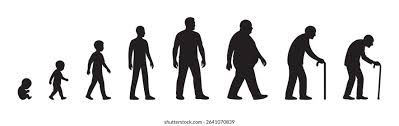
Why some age well (and others don’t)
The most important finding of the study is not the decline itself, but individual variability.
Over the years, the difference between those who stay fit and those who decline becomes enormous.
At age 63:
aerobic capacity varies greatly between active and sedentary individuals
power and endurance show increasingly wide gaps
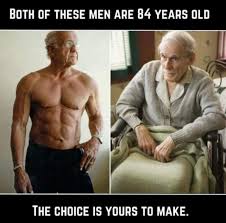
Translated: not everyone ages in the same way, and chronological age only explains part of the result.
The factors that really make a difference
The good news is that much of this difference depends on factors that can be changed.
Being active when young helps
Those who were already active as teenagers maintain an advantage over time. Creating good habits early on pays off.
Starting late still works
Those who start exercising as adults really do improve. The benefits are measurable and concrete. It is never too late to start.
Lifestyle and awareness matter
Context, education and habits also indirectly influence physical health. The more aware you are, the better decisions you make over time.
How much exercise is really necessary for good health?
Here we come to one of the most interesting points, especially for those who believe that when it comes to fitness, “more is better”.
Weight training
Meta-analyses show that 30–60 minutes per week of resistance training is sufficient to achieve most of the health benefits and reduce the risk of mortality from all causes, cardiovascular disease and cancer.
Training more is not wrong, but from a longevity perspective, the benefits plateau much sooner than you might think.
Aerobic activity
Even for cardio, there is a threshold beyond which the benefits increase only slightly.
Walking, running, cycling or playing sports for a few hours a week is more than enough to protect the cardiovascular system.
The message is clear: you need the right stimulus, not the extreme.
The most underrated factor: variety
One of the most interesting aspects that emerged from the studies is that doing different things matters as much (if not more) than the total volume of training.
I don’t want to be falsely modest, but let’s be clear, this is what I have always preached and, in a certain sense, what should be done in a good martial arts course, especially MMA and self-defence, where athletic training is important and is achieved through variety.
Those who practise multiple types of physical activity:
have a lower risk of mortality
obtain greater benefits than those who focus on a single discipline
This is regardless of the total number of hours per week.
The reason is simple:
cardio trains the heart
weights preserve muscles and bones
power keeps the nervous system efficient
mobility protects joints and autonomy
No single type of training can cover everything.
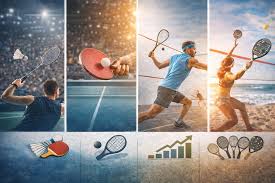
Which activities seem to offer the greatest benefits?
To understand whether all physical activities are ‘equally valuable’, researchers analysed various common forms of exercise, observing their association with mortality risk over time. The interesting result is that there is no linear relationship of the ‘the more you do, the better’ type, but rather thresholds beyond which the benefits tend to stabilise.
Here are some examples to clarify the concept.
Walking, often underestimated because it is considered “too simple”, has proven to be one of the most protective activities: those who walk regularly show a reduction in mortality risk of around 17%, with benefits reaching their maximum even at moderate levels. There is no need to walk endless kilometres every day.
Racket sports (such as tennis and similar) have shown surprising results: a reduction in mortality of around 15% with just a couple of hours per week. Coordination, speed and intermittent cardiovascular involvement probably play an important role.
Even a trivial gesture such as climbing stairs is associated with a significant improvement: small volumes, if repeated over time, seem sufficient to achieve a measurable protective effect.
Weight training confirms its importance: a reduction in mortality of around 13%, with benefits that stabilise even at relatively low volumes. This is further confirmation that marathons in the weight room are not necessary for good health.
Running shows a slightly different relationship: the benefits are also present when increasing the volume, without an immediate clear plateau. This suggests that, for those who tolerate it well, it can be an effective tool, provided it is part of a balanced routine.
Swimming, on the other hand, has yielded less clear results. Not because it is “useless”, but probably because it is difficult to quantify intensity and actual load accurately, making data interpretation more complex.
The overall message is very clear: no single activity is magical on its own, but many different activities, practised continuously and at sustainable volumes, build a solid protective effect over time. And this is where variety becomes a strategy, not a detail.
More muscle ≠ more longevity (automatically)

Building muscle mass is essential, especially as we age.
But maximising hypertrophy is not synonymous with long-term health.
More muscle means:
greater cardiovascular demand
more continuous work for the heart and circulatory system
The point is not “less muscle”, but a cardiovascular system that is adequate for the mass you carry.
Strength and conditioning must grow together.
The Eternal Warrior Method: Training to Stay Whole
All this leads to a conclusion that, among other things, follows the principles of Jeet Kune Do:
over-specialising is a terrible strategy… for ageing well.
This logic gave rise to the Eternal Warrior approach.
A method I discovered in my ongoing search for new training systems.
A method that does not seek to maximise a single quality, but to keep the body competent, efficient and adaptable over time.
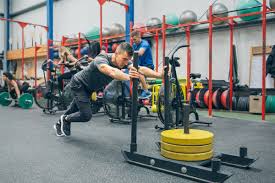
Eternal Warrior
Improve health, function and longevity while maintaining a muscular appearance.’
The Eternal Warrior approach is designed to increase longevity and quality of life through increased function and physiological adaptations, while still focusing on hard performance in the gym and looking good naked.
The Eternal Warrior programme is Coach Thibaudeau’s latest creation and one of his proudest.
This programme is designed to create resilient warriors who will outlast and outlast their opponents at every turn.
(From the website Thibarmy.com)
The pillars of the method are simple but often overlooked:
- integration of strength, power, hypertrophy and conditioning
- high work density, without turning every session into a massacre
- sustainable intensity, always leaving technical and nervous margin
- use of functional movements and carried loads
- mobility work under load, to protect joints and tendons
The goal is not to be the best at one thing today, but to remain competitive on multiple fronts throughout your life.
It is an approach that combines aesthetics, performance and health without sacrificing anything in the long term.
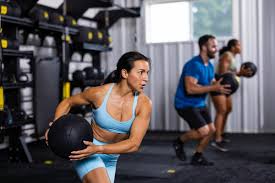
Practical guidelines for different ages
To summarise what has been written so far:
20–35 years old
- variety of stimuli
- regular cardio
- mobility even under load
- change sports or focus every few months
35–50 years old
- fewer days, more quality
- more recovery
- structured conditioning
- daily mobility
- at least 4–5 different types of activity
Over 50 years old
- functionality first and foremost
- complete but short workouts
- strength, balance, fall prevention
- constant daily movement
Rules that apply at any age
- Quality > quantity
- Consistency beats any protocol
- Diversification is not optional
- Keeping your heart in shape is essential
- Moving every day is non-negotiable
Conclusion: training to remain martial arts proficient over time
Physical ageing is not a problem that suddenly appears with advanced age. It is a slow process that begins when we stop training to be capable and start training just to look good.
The real question is not how many years we will live, but how functional we will be during those years.
From this perspective, martial arts training is one of the most comprehensive and intelligent models of physical preparation geared towards longevity.
Even without competition, martial arts training forces the body to remain efficient on multiple levels: strength, power, endurance, coordination, mobility, responsiveness and clarity under stress.
A martial artist cannot afford to be “strong but slow”, “resistant but fragile” or “mobile but weak”.
A martial artist must maintain a continuous balance between different qualities, adapting them over time to age, recovery and the demands of real life. And this is precisely what makes martial arts naturally compatible with a long-term approach.
Methods such as Eternal Warrior’s help to describe this philosophy well: not the pursuit of absolute excellence in a single skill, but the maintenance of a complete, adaptable and reliable body over time. This idea has always existed in the martial arts world, long before it was codified into modern training methods.
Training in martial arts means, ultimately, training for life: learning to manage effort, recover, move well, react quickly and protect your body. These are all qualities that are not only useful on the tatami or in the ring, but every day.
Because the ultimate goal is not to stay young forever, but to remain capable for as long as possible.
And from this point of view, few things teach you how to age better than martial arts training.





Very good and comprehensive summary.