Read or Jump On
Self-defence, psychological aspects
I am always looking for new insights and new stimuli as I have always believed that humility and the desire to know are the first characteristics of a good Martial Arts practitioner.
When you decide to embark on a Martial Path, you decide to become a Master of Yourself.
In my continuous research, I came across the Psicofarm website administered by Dr. Giorgio Spennato (Forensic Clinical Psychologist; Specialising in Cognitive Behavioural Psychotherapy; IKMI Referent in Psychology and Criminology) and I found his article on the Psychology of Self-Defence very interesting and relevant to the Bolg, which I have been authorised to share
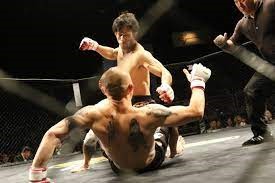
The psychology of self-defence: psychological and behavioural aspects
The psychology of self-defence represents an aspect of human thought and behaviour characterised by complex processes that would be simplified and dangerous to analyse with mere categorical descriptions. When we speak of the psychology of self-defence, we include all aspects of combat in a single definition.
Combat means: physical attacks of all forms, characterised by ‘pure violence and animal aggression’.
In this article, we will not describe every aspect of physical aggression among humans, but we will try to highlight the importance of a body and mind prepared for violent combat.
This brings us back to what we addressed in the last published articles
The psychology of self-defence: the impact of violence
When violence involves us, its effects can be devastating and, if we are not prepared, it devastates us twice.
The first time will happen with the physical attack, if we are unable to protect ourselves.
Worse still, if we manage to survive, the violence suffered will destroy us a second time as we will be psychologically broken down.
In psychiatry and psychology, post-traumatic stress disorder is defined as a complex of ineffective psychological distress resulting from a traumatic or violent event (DSM-V). If we are not mentally and physically prepared to protect ourselves from violence, we can develop the disease. If our minds are not adequately prepared, we will be trapped in a traumatic dimension characterised by perennial anxiety and tension.
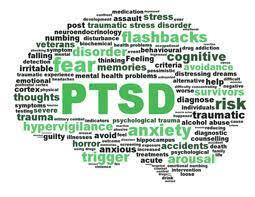
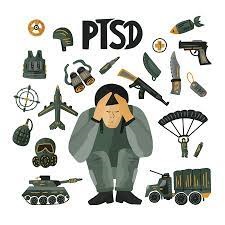
This mentality will nullify every aspect of our lives, becoming perennial victims of conflict with predators.
This happens especially to those who deny the possibility of encountering violence, it happens to those who do not have the courage to face it and choose to deny the path. Denial protects us from everyday violence and gives us optimism that it will not happen to us.
But how do we react when we encounter it? How would we react if we always denied it, thinking it did not exist? We would be destroyed, if not physically, then psychologically. Denial makes us vulnerable and prey to predators. Physical and psychological preparation becomes important in order to cope with the aftermath of aggression and combat with adequate training both in terms of prevention and post-trauma management
The management of combat anxiety
When we talk about real fighting we are not talking about fighting in a controlled environment, like in the gym, where we know that our opponent’s intent is not to hurt us. We are talking about situations where there is no control, where we do not know our opponent’s intentions, and where we face only pure violence.
By combat anxiety we are talking about morbid feelings of generalised anguish: an irrational and uncontrollable fear that affects most people, i.e. violence between people. We all have specific phobias, some of snakes, some of heights, some of public speaking and so on.
Human violence strongly frightens everyone, this is called universal human phobia.
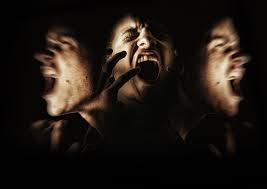
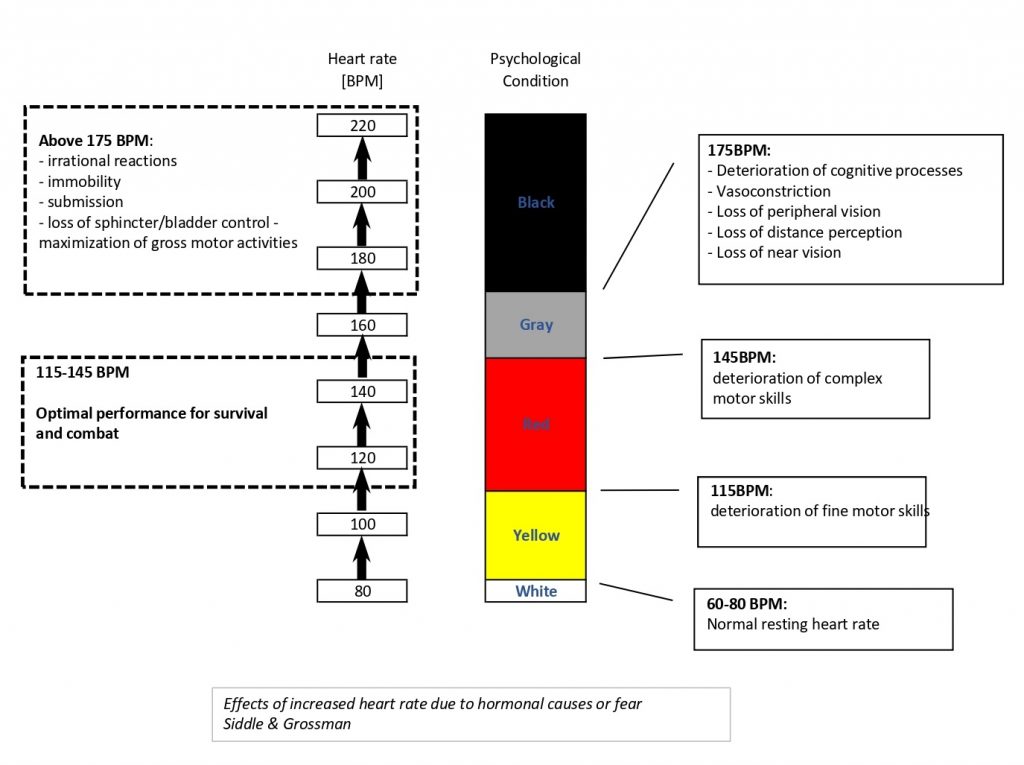
A body that knows self-defence techniques, a prepared body, is a weapon that may not work if we cannot control our emotions, such as anxiety and fear. During an attack, if anxiety turns into panic, it can paralyse us and become our worst enemy, worse than the opponent who wants to hit us. The heart will beat above 145bpm, it will beat so fast that the brain will run out of oxygen, hands will shake and thoughts will deteriorate, which means we stop thinking. We become paralysed by fear and become passive victims. (I have spoken specifically about this topic here).
As repeatedly pointed out in the Blog:
Those who sell self-defence techniques or training courses without considering the psychological aspects of combat and violent aggression are making a serious mistake. (See AM and reality)
Not only does he underestimate a fundamental aspect of defence, he also provides us with incomplete and consequently dangerous training.
Self-defence psychology: comprehensive preparation
Studying self-defence techniques provides us with practical tools and develops muscle memory that, in extreme cases, can save our lives. At the same time, understanding the psychology of self-defence becomes a priority for better management of violent combat phobia. When talking about self-defence, we are talking about psychophysical preparation, which provides access to effective techniques to neutralise aggressors on the one hand and access to and understanding of our emotional and cognitive processes related to combat on the other. Therefore, we need strong bodies, strong minds, good emotional management and knowledge of criminal minds.
To defend ourselves and fight criminals, we must study criminals.
Some psychodynamic aspects of criminals
Criminals do not choose their victims at random, as in nature they choose the easiest prey to overpower in a group.
A study on violent crime conducted on people under arrest, accused of extreme violence, beatings, torture, murder found that most of them reported that they carefully selected their victims based on assessments of passive, vulnerable, insecure and easily subjugated behaviour. The predator knows body language, he can assess when he is in the presence of an easily subdued victim, he understands this.
Criminals make a mental representation of how things are going before committing violence and do not expect an anti-violence response

Knowing the predator’s mental processes helps us in the defensive process
People who use violence are often very familiar with it. They are accustomed to it, this is an element in their favour that puts them in a dominant and advantageous position. That is why a street thug in many situations can have the upper hand against a martial arts instructor; he is used to the psychological stress of combat. He knows that violence and anxiety do not make him panic, so it is easier for him to get help during fights.
In order to learn the art of street fighting and to really know how to defend oneself against violence, it is necessary to follow a self-defence course that takes into account both physical aspects (effective techniques, realistic simulations, exercise under pressure, etc.) and psychological aspects (the process of paralysis or mobilisation of defences, methods of dealing with dangerous situations, emotional knowledge, verbal and non-verbal language for prevention, etc.).
The importance of self-defence
In this article, only some of the psychological and behavioural aspects behind the art of combat have been analysed. Our intention is not to inspire readers to use violence, because let us remember that every confrontation, whether intended or not, brings physical, psychological and legal damage.
Our aim is to raise awareness of the psychology of self-defence that takes into account the importance of psychological aspects. Mind and body are inseparable, a complete preparation for self-defence must involve both.
Consider a quote from George Barton:
The more you sweat in training, the less you will bleed in battle.
This maxim teaches us that everything we need to neutralise and stop violence, must be learnt beforehand. Really internalise it so that you can use it in stressful situations such as violent aggression. If we are not prepared on a global level, during combat we will be able to lock ourselves in what is called a black condition, experience auditory and sensory distortions, develop a phenomenon called ‘tunnel vision’ and incapacitate fine motor skills (e.g. dialling a simple emergency number on a mobile phone can become extremely difficult).
Combat mentality
To get around the fact that the mind can lose control of the body, it is important to train oneself to manage the body through the mind. Our weapons to defend ourselves against aggressors are our physical and mental abilities, if there is no alternative, we must use them, we must trust our instincts, fight or flee, the important thing is to react and not be paralysed.
Dr. Spennato later refers to the article ‘blocking anxiety with breathing’ available on his website, where he talks about a particular technique that allows one to intervene on a part of the body that follows involuntary rules, a technique that allows one to block anxiety and fear, hand tremor, decrease heart rate. Reference is made to the tactical breathing that I have already mentioned here useful for managing states of anxiety.
A personal experience
Not recently I had to deal with my first panic attack…anxiety. It was a quiet summer day at the beach and as is my habit I was going for an offshore swim using only my mask with the goal of reaching the marker buoy (about 300m from the shore).
A few metres from the buoy, I still don’t know why, I panicked, perhaps the distance, the depth of the water and the poor visibility, the fact is that I thought I was drowning without anyone being able to help me. The conscious part of me activated and started to convince the other part of me that there was no reason to panic, I am a good swimmer, I am in good physical shape, I needed to relax and return to shore. I started to apply tactical breathing and slowly made it back to shore.
I admit, however, that it was not a pleasant feeling, which later also made me angry.
Conclusions by the author Dr. Spennato
On the one hand, the art of combat and self-defence allow one to improve one’s muscular structure, reflexes, and ability to defend oneself; on the other hand, they allow one to indirectly intervene, through the body, on the structure of the personality. It is therefore something of extreme social and personal importance.
A good self-defence training course not only teaches how to fight but also aims to make us better people. The study of the psychology of self-defence also becomes a priority for this purpose. We all know the positive effect that sport has on physical and mental health: it is an indirect way of intervening in the psychological aspects of a person, emphasising and enhancing positive resources, while eradicating harmful aspects. In the article Psychology of Combat, we will discuss some psychological and behavioural profiles of people, regarding combat and violence, comparing them metaphorically to three types of animals.
We can choose the path of denial of violence and if it unfortunately touches us, we will be overwhelmed. We can also choose the negative instrumentation of violence for dysfunctional benefit. Finally, we can choose to study violence and the art of combat to learn how to defend ourselves when violence comes to our door.
Conclusion
In this interesting article from Psicoform we address the topic that I consider to be the heart of Personal Defence and was the purpose for me to create this Blog.
It was not long ago that I was introduced and proposed to a gym for a course on self-defence, the owner as the first question asked me what type of defence I teach referring to Krav Maga.
Which made me smile! A few years ago self-defence was linked to Wing Chun today it is linked to KM, unfortunately both are valid martial arts but that does not automatically make them an art for defence. Learning good techniques without knowing the psychological aspects of real combat can be useless and dangerous. We can delude ourselves that we are good fighters by working safely in gyms and become easy victims on the street simply because our mind has gone into lockdown and our body does not react as we would like.
We can turn a blind eye hoping that violence never touches us, but if we decide we want to learn how to defend ourselves we should not rely on chance, we should not choose a course just because the techniques proposed are spectacular or because they seem violent and therefore effective.
As explained in my first article martial art does not mean self-defence or as I say
SELF-DEFENCE IS NOT JUST A MARTIAL ART
The most important means to survive a deadly clash is neither weapon nor martial skills.
The main tool is the combat mentality.
(Col J. Cooper)