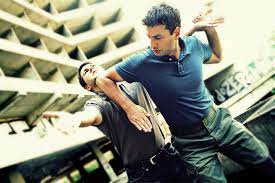
Read or Jump On
Self-Defence: Training Vs Reality
Martial arts, how they are classified
Let’s start by clarifying that martial arts is not the same as self-defence.
This may seem obvious but I can assure you that it is not. Although there is no shortage of tools to get information today, we tend to choose the course we find most comfortable or most advertised, or the techniques that we find most effective… spectacular.
The world of Martial Arts is very wide and for this reason it is important to choose the right one for your needs.
Martial arts have been used for centuries as an activity to promote physical fitness and spiritual awareness. Most martial arts styles originated from Eastern cultures.
Martial arts, especially Chinese martial arts, are often classified into internal and external. In internal styles (the oldest and most contemporary to Buddhism) spiritual teaching prevails, in external ones strength, power and speed. Of course, the division between the two approaches is not so clear-cut, because mainly external arts can have internal teachings and vice versa.
The origin of Japanese martial arts can be found in the warrior tradition of the samurai.
Today, martial arts are studied for various reasons: self-defence, physical health, form of gymnastics, self-control, meditation, empowerment in the use of force, gaining confidence in one’s own body, confidence in one’s abilities and awareness of one’s limits.
Personally, I believe that we can divide the Martial Arts into three major classes:
- traditional martial arts;
- competitive martial arts;
- personal defence.
Traditional Martial Arts
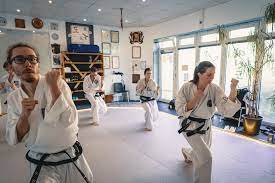
These include Karate, Ju-Jitsu, Kung-Fu, Aikido, Tai Chi Chuan, Wing Chun, etc…
They are styles that involve forms or kata (a sequence of techniques performed by a karateka facing an imaginary opponent). They can be soft or hard.
Some are internal, tending to develop first and foremost the inner strength and life energy flowing through the body. While others are external, combat-oriented; strength, elasticity, explosiveness and physical prowess acquire importance.
They are disciplines that require years of study.
They have a codified programme of techniques classified by belts.
Until the black belt is reached, little space is given to creativity and freedom of expression.
The vision of the complete art is limited in the initial phase (white belt) and expands as the years go by.
Space is not always given to athletic training;
Competitive Martial Arts or Combat Sports
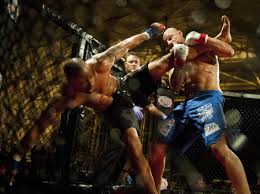
The best known are Kick boxing, Muay Thay, Boxing, Judo, Wrestling, MMA, Kendo, Savate, Taekwondo, Sambo, Wrestling.
These disciplines require good athletic and technical preparation.
Training is intense and includes an athletic, technical and sparring phase.
The main techniques of the chosen style are trained. Some prefer fighting on the feet, others on the ground.
You train and fight according to rules. It is forbidden to strike in sensitive and deadly areas.
Matches take place within clearly defined areas, are timed and managed by a referee who is ready to intervene.
Some competitive disciplines lend themselves more than others to self-defence but obviously have a sporting approach to combat.
Self-Defence

When people talk about self-defence they often refer to Krav Maga and Wing-Chun.
Self-defence refers to techniques that a person can use to defend themselves against dangers and threats to their physical or mental integrity, typically in cases of aggression in the street.
It is an essential concept to act only in defence and never in offence (in accordance with the rules in force).
In self-defence unlike in competitive martial arts
there are no prohibited techniques;
Fights may last a few seconds, whereas sports training prepares the athlete for long encounters.
Combat is not planned and the opponent is unknown.
Simple and effective forms of combat must be studied, some possible aggressions are simulated and the legal consequences of a wrong use of violence are explained; it is also useful to have a good athletic preparation.
Any unarmed person placed at a distance less than that of his limbs from you, can be considered offensive, if further away the form of aggression could be limited to a verbal one.
For any individual there are common instinctive responses, from the simplest to the most complex, to many different harmful stimuli. The world of instinctive and uncontrolled responses is fertile ground on which self-defence works.
But can attending a Martial Arts course help to defend oneself in the event of aggression?
We must not underestimate the different context in which these events take place: the gym is a safe and secure environment, while on the street the influence of fear is added, which can lead us to forget all those beautiful moves we learned in class.
We can say that what distinguishes a fight in Martial Arts from an aggression is the presence of emotions and the unpredictability of the event itself.
THE ROLE OF EMOTIONS AND REALITY
A self-defence course allows you to learn moves that you can use if necessary, but it cannot recreate all the variables that come into play during an attack.
The fight happens when you least expect it and you don’t have time to think, there is no one to interrupt the encounter in case of difficulty and take care of you if necessary, and you don’t always fight just one person.
Adrenaline and fear, which negatively affect your performance, are not present during a fight in the gym.
Emotions play an important role in those moments of combat as our body and mind receive sudden stress. This can cause paralysis and amnesia.
We will look at this topic in more detail in the blog. Here a first article
Self-Defence and real combat course
So what?
Don’t worry, I’m not saying there’s no point in taking a self-defence course.
However, we must distinguish between a self-defence course and one based on real combat.
The former is useful in any case because it gives us the opportunity to gain self-confidence by learning to know our bodies and our limits, as well as keeping us trained and teaching us how to throw blows and manage hand-to-hand combat.
A real fighting course differs from a self-defence course in that the training is more realistic, stress is experienced through high intensity training and aspects relating to emotions and the psychology of confrontation are addressed.
In a real-life combat course, the various combat distances are trained, including ground fighting.
Importantly, space is given to athletic and physical preparation. Let us not forget that in the event of a fight, my body will be my weapon and my shield.
Fitness and Martial Arts
I have always believed that a GOOD martial arts and real combat course is one of the best activities to keep fit while learning defence techniques.
I have underestimated the completeness of martial arts training in the past.
In 2005 when I started my JKD journey I felt I was in good physical condition. I was training in Ju-Jitsu plus lifting weights and at the time I was doing pull-ups with over 120kg.
I took part in three days of the camp, sure of my preparation, and the result was that on the third day I was hurting muscles that were unknown to me, I was not able to walk and lift my arms. It was a complete workout
Conclusion
Before start a martial art course is important to understand our goal.
Are you looking for self-defence, physical health, form of gymnastics, self-control, meditation, empowerment in the use of force, gaining confidence in one’s own body, confidence in one’s abilities and awareness of one’s limits, competition?
Once is clear what are you looking for you know on which classes you have to focus
- traditional martial arts;
- competitive martial arts;
- personal defence.
Are you looking for a pure Self-defense course?
Two possibility:
- self-defence
- real combat
and here is depend on the reason that bring you to search for a course.
In this regard, an interview with Alessio Sakara a couple of years ago is interesting
Whatever your choice this blog have the aim to provide the needed information for a good auto defense
Let me know if you have any question