

Read or Jump On
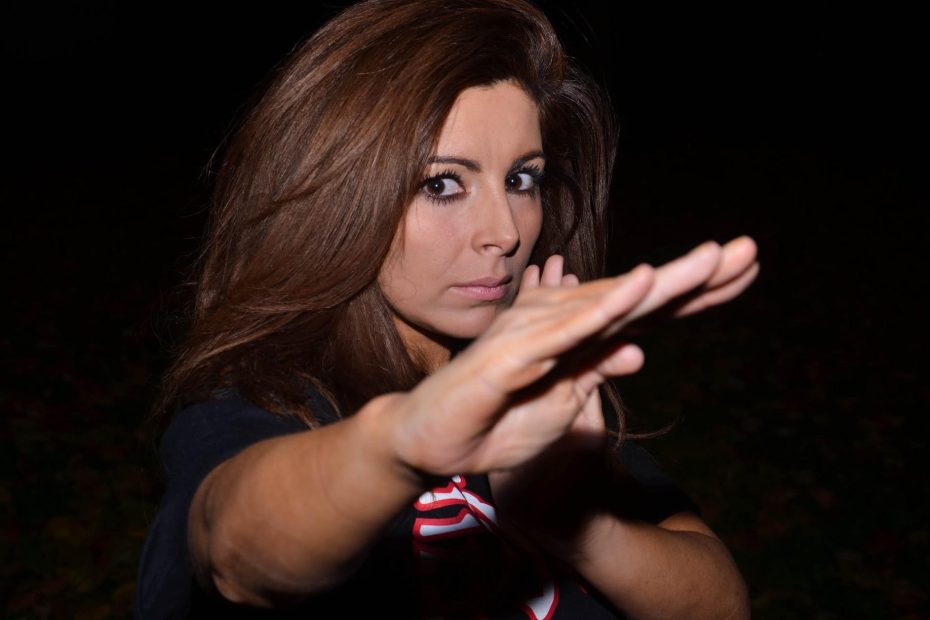
Sifu Della O'Sullivan Fight Like a Girl
Preface
A few months ago I saw a promo for the book ‘Fight like a girl’ and thought it would be interesting to contact Sifu Della O’Sullivan.
It is not easy to meet a female Sifu and have the opportunity to get a female perspective on the subject.
Having the opinion of an experienced person is of great value, especially in this case as the interviewee herself is a woman.
Sifu Della’s availability and generosity provided me with a great deal of information, which for ease of reading I have divided into two articles.
In the first article, after a quick introduction of Sifu Della O’Sullivan and Wing Tsun we saw practical aspects and defence techniques as well as the effects on our nervous system.
The second article will instead focus more on the psychological aspects. We will see practical tips and get to know Sifu Della better.
Mindset
In your book there are chapters dedicated to mindset.
What do you mean and how important is psychological preparation?
Meaning
To address this topic, it is useful to first know the correct definition of the word ‘mindset’.
The term ‘mindset’ literally means ‘mentality’ and is often used to describe an attitude or rather a particular way of approaching the challenges and events that life offers us.
The book
I talk about the importance of mental discernment and self-belief in my book. I believe they are crucial components to effective self-defence.
If you lack mental clarity, self-belief or self-worth you will not only make poor decisions You are likely to be more easily manipulated and you are less likely to be able to execute the physical side.
For eg- I was a people pleasure (I still have to work on this now) but because I have a kind heart, I muddled that up with having to be nice to everyone and wanted to be liked by everyone. If I wasn’t liked then this would stir up a fear in me that I could be in danger again.
I lacked the wisdom to know that abusers behaviour has very little to do with how much they like you and more to do with how much they can control you and in fact how much they dislike themselves. Bad behaviour is a reflection on the person behaving badly not the person being subjected to it. This alone gave me the confidence to start to set boundaries, once I got used to that even just verbally, I started to trust myself more.
The fact is statistically we are more likely to be harmed by someone we already know, not a stranger on the street and even strangers who are perpetrators know how powerful it is to tap into someone’s empathy. It’s important to know how to show up for yourself always. And learn to listen to your intuition about others, and know when it’s time to sever bonds, set boundaries and if that person actually cares for you in the way you deserve.
Self-confidence
I also talk about how to develop composure under pressure and under real threat, and how mental discernment and self-belief lead to composure and focus under pressure.
I had to do a lot of work in this area because of my PTSD. I went from having panic attacks, having my entire body shake from just standing up and reading to a room (when I had to do a speech at work for eg) or doing a martial arts performance to talking on tv, doing a demonstration in front of thousands of people. I even read my mothers obituary and run her entire funeral. Before that I was able to communicate crystal clearly with the doctors about her condition. This was the most pressure my nervous system had been under in years. I still felt it and sometimes my hands still were a little shaky but I remained composed and focused. Now my state in any emergency is automatically to go even more calm, and composed. I rarely panic.
This was one of the biggest gifts martial arts gave me.
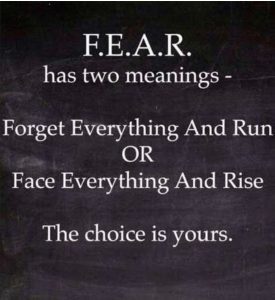
The fear
I also talk about how to interrupt fear when there is no threat, appropriate it & use it to advantage of it, how to connect with your ‘fighting spirit’ (the capacity to fight when needed), the art of acceptance, introspection, & setting boundaries.
Self-defence, tips
In your book there are chapters dedicated to strategies, tactics and tips. Can you give some general advice for self-defence?
Number 1 (and I know many say this) but I have known this to be true from my own personal experiences
TRUST YOUR INSTINCTS
don’t allow your internal dialogue or the words of others to talk you around – if you feel something isn’t right listen to it.
Learn to trust yourself.
Secondly, take action. It doesn’t matter if it’s a small step like going for a walk with your head up and shoulders back, swing your arms a little even and don’t mind about how you look. Just feel the action. Action prompts competence, and competence prompts confidence which fuels more action & motivation.
Don’t wait for the motivation to come it works the other way around, first take action even if you don’t feel like it and the motivation will come.
REACT
I will share an acronym I created for me in my book:
R E A C T
R – AISE AWARENESS & RUN
make lots of noise (screaming ignites fight/flight response and raises awareness to others around you).
Run if you have time and space to run. You can also run around a car if you cannot run fast and keep the distance between you and the attacker.
E – EVERYTHING AND ANYTHING AROUND YOU IS A WEAPON
use anything you have to hand to aid your goal to get to safety. Throwing things, hitting with things (I cover how to use everyday objects in my book).
A- ATTACK the weakest targets along the shortest route
don’t telegraph your moves- Use strait lines to attack, make sure you are in range, and hit the weakest targets and targets that instinctively make a person address affect their sight, their balance (hit ears), their breathing ( hit throat). Strikes are a tactic to create space to get away.
I do however also address when to use them so to not escalate a situation.
C – CALL for help
if you have not done so already call someone as soon as you are able to even if you don’t have a phone, run and shout for help.
T –TELL someone
talk about it. Tell someone as soon as you can exactly what happens, not only does this kickstart your process of healing but its important as our minds may start to protect us from remembering painful experiences and we may forget important details. Also talk to a therapist as soon as you are able even if you feel fine. It could have been something minor but resurfaced something from past, talking therapies are really important when it comes to the aftermath of a potentially dangerous or violent encounter.
In the aggressor’s mind
Lastly: understand the mind of a perpetrator and use that knowledge to your advantage.
I learned this from a bodyguard training unit in 2010.
There are 3 main things a perpetrator looks for in a victim or as an opportunity to create a victim:
- lack of awareness
- in an isolated area or can be easily moved to an isolated area
- appears a victim (you look like you are an easy target or won’t put up a fight)
This knowledge trouble me some for a while, and I became hyper vigilant as a result which isn’t a good feeling either. I felt like I had to work so damn hard not to be attacked, and the onus was on me. So, I found ways to use this to my advantage and feel empowered rather than an anxious ball of fear.
(this is something I had already addressed when talking about activation levels)
Advices
Here are a summary of some tips I shared in my book:
- awareness – to be aware you do not need to be hyper vigilant you just need to be present. So take small conscious moments where you will put your head up when you are walking take note of what around you check in with all your senses. This is not only to be aware of your surroundings but it’s a healthy habit to stop and allow yourself to be present. Not thinking about future, past or the list of things you must do that day, or going over an argument you had recently in your head. Just take a mental break and look at what’s around you. The side affect is you are actually present which means you are aware. You are not distracted by your phone or thoughts and you will find you will start to notice your breathing and you will feel good, and you will appear more confident with your head up, and not only appear it you will feel it too. Body posture changes have a physiological effect on us as do our thoughts. (this attitude is practised in Mindfulness, which is precisely a specific meditation practice centred on awareness of personal present experience)
- isolated area – generally it’s a good idea to chose a route that is not so isolated but we cannot always do that. For eg. if we live in an apartment with underground parking. Or we become lost. If you cannot avoid an isolated area make sure you are aware and you chose to park where there is cctv, look in all mirrors before you get out of your car etc… To avoid being isolated I have a rule that I will show up for myself just as I would a friend, and if I were with a friend and she said lets go here or this way, or go with that group who are offering us a lift and I felt something wasn’t right I would set a boundary and say nope.
- You appear a victim – I found this one troublesome as I am a 5ft (150cm) petite female. I am a martial artist but in my civis I double many people would see me as a threat. But you can make yourself feel big no matter how small you are. And the key here is how YOU feel, because we cannot control the thoughts and actions of others. But if you feel strong and confident it may have a side effect to deter a potential perpetrator. Things like Shoulders back, head up, sit with feet planted on the floor so you can feel the ground, speak with a clear and calm voice.
Sifu Della O’Sullivan, Who is she?
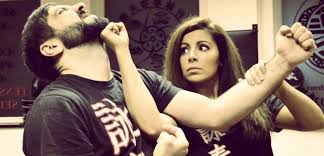
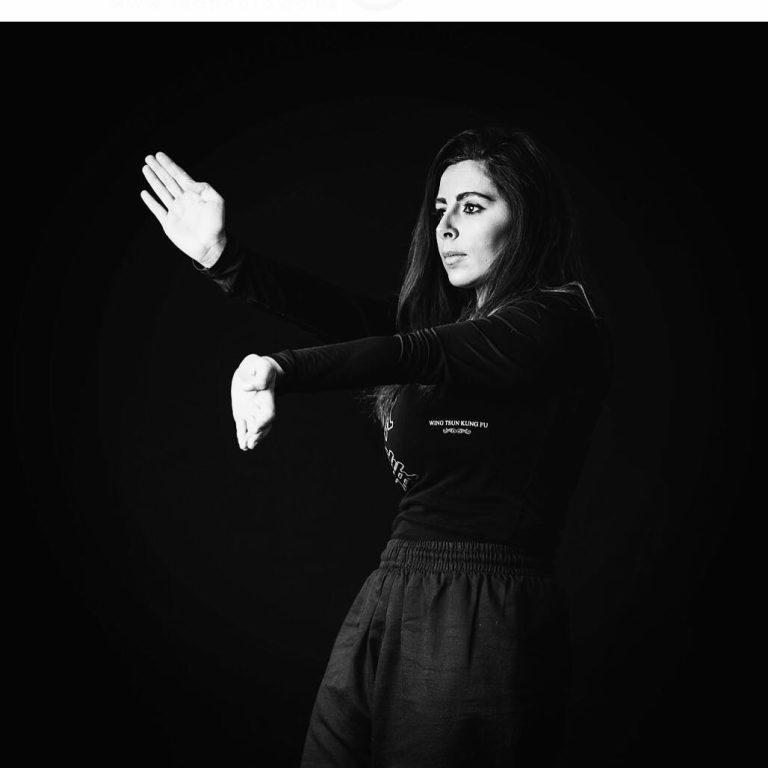
My Martial Arts career is now at its 18th year & my discipline is Wing Tsun. But I do like to test and try out new things, to test what I know with experienced people so that I have real faith in what I teach. I also really like BJJ, Mui Thai & weapons systems like Kali and Escrima.
The Beginning
My first year of Wing Tsun I trained roughly 40 hours per week. I was promoted to black shirt (grade 9) within six months and I opened a school after one year
Because of the amount of hours I was training, my skills were pretty decent but I would never repeat this method of fast tracking my students. I know I wasn’t ready in terms teaching experience, experience testing my new skills, and my self-confidence. But I did a pretty good job nonetheless and I learned a lot.
For the first 10 years of my teaching career I was very guarded about my life experiences before I began martial arts and my main reason for wanted to train. I often just said one of the truths for my starting which was that I became a single mum. I always loved martial arts, my brother and father were martial artists under a very well respected Karate Master (Sensei George Andrews of Okinwan Traditional Goju-ryu Karate), he also taught me when I was 8 and for a short time when I was 15 so I wanted to start training.
Motivations
I never mentioned the main reason because to put it simply, I was embarrassed. Because I became a teacher so soon I had a new role, a role where people viewed me as someone who is strong, tough, disciplined, and someone who is not easily manipulated. Although I was all of those things to a degree I didn’t feel like that on the inside, and I thought that if my students and peers ever knew I would not be taken seriously and the secret I kept was that I was once so scared. I would avoid certain areas of London all together, or that I would have terrible panic attacks because at a pivotal point in my life I was once a victim of horrendous harassment, stalking and violence which lasted a number of years.
Of course I was totally wrong about this. I now realise that this narrative was stemming from the toxic mindsets of other ‘strong people’ I allowed in my life at the time and I knew if they knew they would react negatively. It wasn’t until I shed those connections and I connected with other survivors that I realised the power in owning my trauma and letting go of the shame.
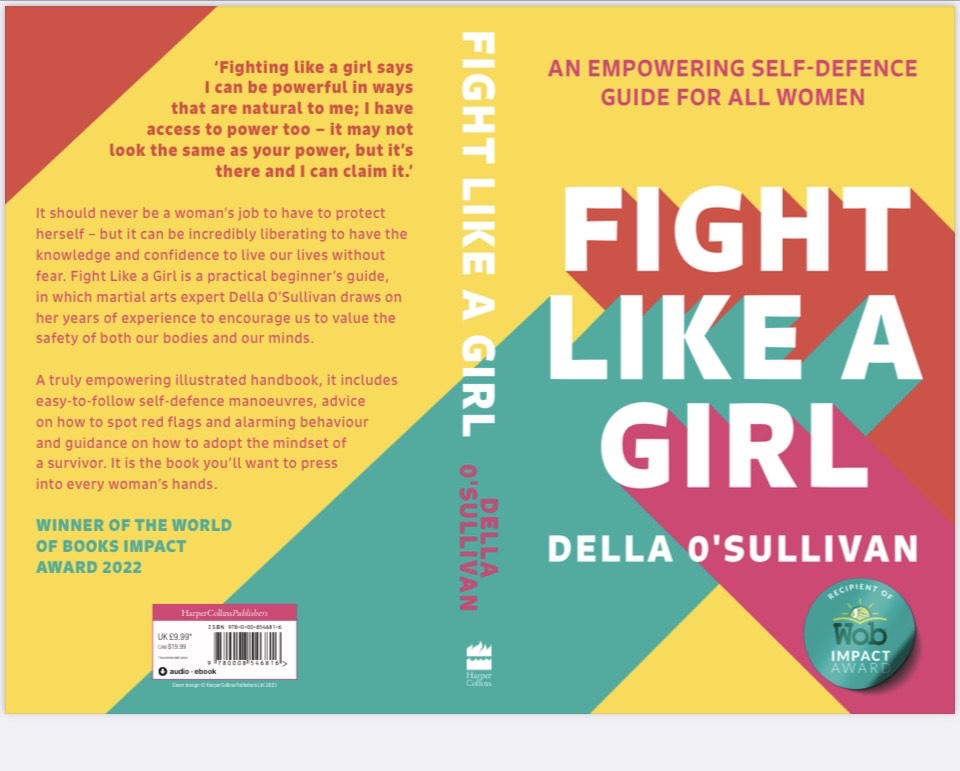
Fight like a girl
With that step I set up ‘fight like a girl’ a self-defence program for women and girls. I didn’t set this up to make money, or become famous. I set this up because I was asked to by other survivors who really wanted to train but didn’t yet have the confidence to walk into a self-defence course, or a martial arts club just yet, they asked for a stepping stone, and they wanted to be taught by someone who has been there. Some had trained before but expressed they experienced triggering dialogue and methods in other courses they had tried and were totally put off.
I created a program which I wish I could of had access to when I was that frightened teenager. And there was a lot to unpack, I did a lot of research and worked alongside a local domestic violence service which my courses support with donations and free spaces to their clients. But essentially, I wanted F.L.A.G to be an excellent vehicle first, so that when I poured in the ‘fuel’ which was techniques it could really have some movement.
The programme
I teach in principles, and approach first as techniques are useless without the right approach and a good teaching method. It needed to also be realistic but I realised if were to start there it may resurface things for many students and they may (like I had) become emotional and then feel embarrassed if this happened too soon. I realised that emption was inevitable for survivors but if it were to happen in space they did not feel safe & empowered then it would disempower them. Survivors nervous systems are likely be elevated already before they even start training so I also looked at ways to help them regulate it, and build up to teaching the techniques that evoked the biggest reactions. I know not everyone is a survivor but statistically 30% of women aged 15 or older have experienced physical and/or sexual violence, and non-sexual violence at least once in their lifetime.
I knew which techniques evoked the most surfacing of emotions and nervous system triggers because they were the ones that nearly made me feel like quitting. And I worked with these women and I asked them too.
Journey
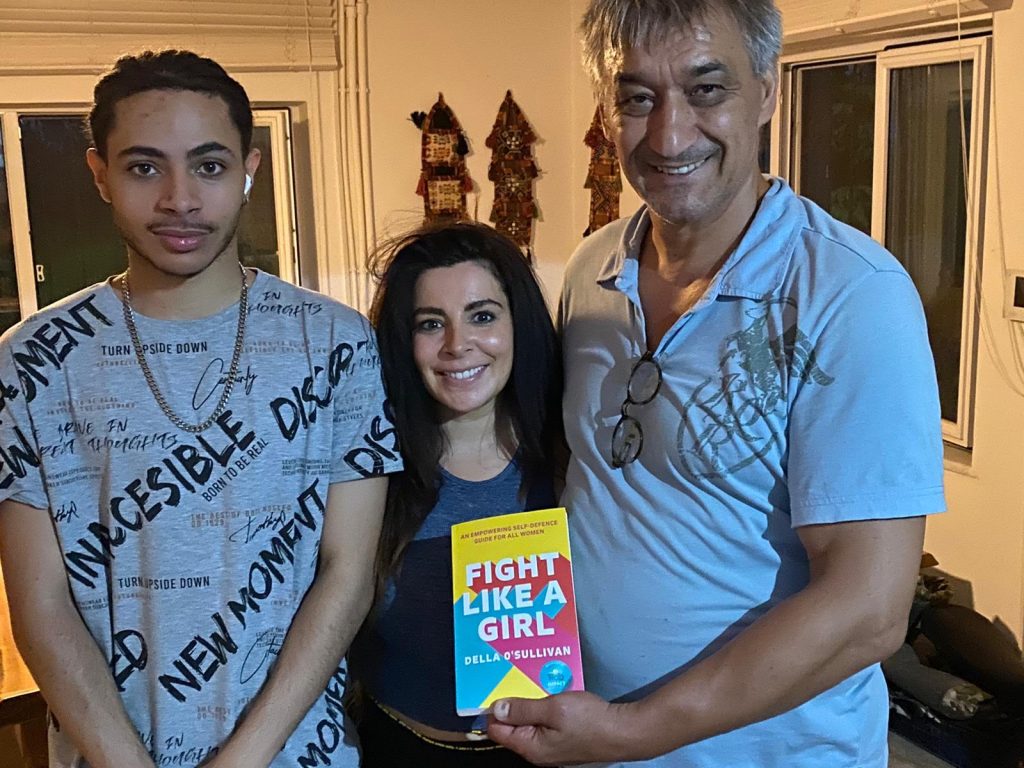
Dai Sifu Emin trains me too. I am not a member of Ebmas, but he accepted me as his adopted Kung fu daughter as I already have my own organisation but he has helped me a lot and believes in what I do.
Also Si-Fu Banyasz Joszef of Zenit WT & Sifu Tamas Barta of Vamillion WT I am in an alliance with so we support each other, share knowledge and run camps together.
Si-Fu Carson Lau taught me long pole, & Sifu Alex (the Kung fu genuius) & Sifu Mark Stas, Sifu Vic Hothi have all been part of my journey and supported me in the last few years which has exponentially increased my knowledge of WT but has helped my flag campaign.
Physical violence
Without getting too gruesome or in too much detail about my past.
I have experienced physical violence in my life, to the level that I know what it feels like to think I might die. I escaped life or death situations on mor that one occasion.
At first these experiences hindered my training as I would have regular flash backs and I would easily lose confidence, I also nearly quite almost every year of my first 10 years. But after time, I accepted that those experiences will always be part of my history, I cannot change what I experienced but I can change how I use those memories. That’s what spurred my seeking of realism in everything I practice. Not only the techniques but the way a violent person thinks, speaks, and behaves.
The Rebirth
I came to realise they gave me a different perspective of what to expect physically from a real altercation or assault but also psychologically. How the nervous system response to a level of threat that is deemed hopeless, or unlikely you will come out ok.
This is different from just a fight. This is a life or death feeling, this is like feeling like prey vs predator not just facing someone who is bigger and stronger that’s just the physical hurdle. It’s the psychological one that’s much harder and the aftermath of feeling like prey to someone else doesn’t go away, the nervous system is altered to protect us, and it takes a lot of work to regulate it again.
The training
Since I have been training, I have not had to deal with a high-level threat on the street. What I would deem as low/medium level which I have successfully manged though dialogue or disengaging techniques without the need to fight or strike someone.
But all my training partners are men who are a great deal larger than me, I have had to spar with them and they did not and do not go easy on me. Although they of course must have more control as it’s a fact that my frame is much smaller. Impact form them would cause much more damage that’s just a fact, but they do not go easy and I would not want them to either.
I have experienced trainers who give false hope, and don’t really push you or they let you get out of a hold for e.g. so that you believe in their technique, and I don’t like this for me. I wanted realism because my life depended on it. But some trainers would get offended as if I don’t believe in it but I wanted to test it. I wanted to see how I can use it and train it with resistance.
Conclusion
Well what can I say. I had seen it right :-) and from the answers I got from Sifu Della O’Sullivan came out a very interesting article on Self-Defence, not only for women, and her method of teaching.
I have tried to leave her answers in their original form to give more emphasis and reality to the text.
Her experience with survivors, as she calls them, has given her the opportunity to create a very interesting training path. A path that has a soft start to allow people who are victims of aggression, and therefore in shock, to approach combat gradually by regaining confidence and security in their own body and in contact with another body.
Sifu suggested some techniques not only physical but also psychological for dealing with an altercation or an aggression and again emphasised how important psychological preparation is more than physical in order to be able to manage our emotions and reactions, such as freezing/immobilising and being a fawn, i.e. trying to win someone’s favour by flattering them.
Her acronym REACT is also very practical, reminiscent of advice given by other street experts such as Mario Furlan, and with which we introduced the concept of mindfulness, a practice increasingly suggested and practised for psychophysical wellbeing and to which I will try to return with a specific article.




Fantastic site Lots of helpful information here I am sending it to some friends ans additionally sharing in delicious And of course thanks for your effort