Read or Jump On
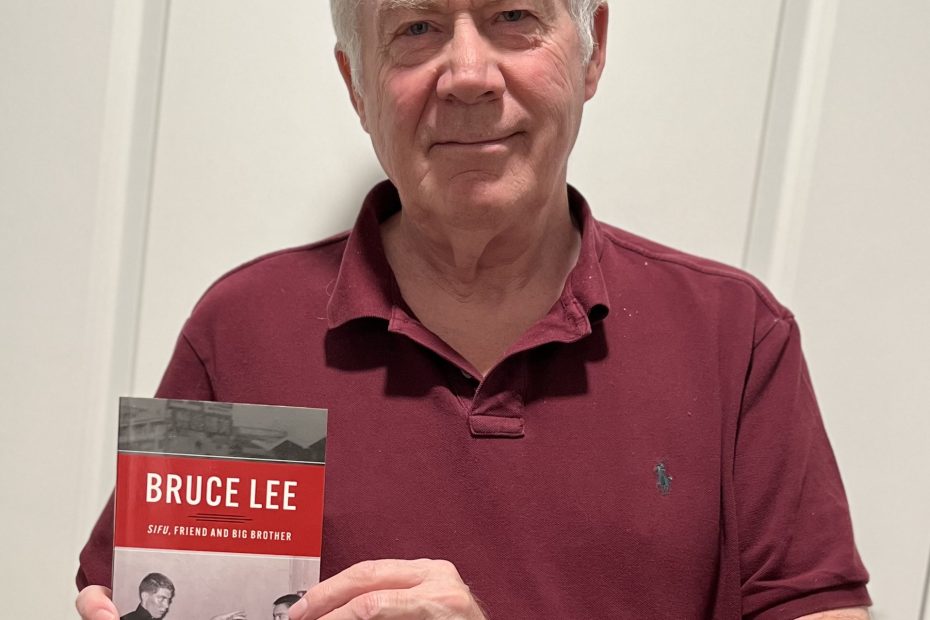
Doug Palmer - Sifu, Friend and Big Brother
I’m feel so blessed to host another close friend of Sijo Bruce Lee in my Blog.
In the last few years have been published new books with important testimonies on Lee’s character. People who until recently were little known to the general public.
I’m so happy, about the new books.
In my understanding as more books came out written by folks who had never met Bruce, but who made very questionable pronouncements about him and his Jeet Kune Do, they felt it was time to add their perspective to the record.
After my latest article with Peter Chin (a private student, close friend and personal confidante of Bruce Lee) I have the honor to host Doug Palmer in my Blog.


Doug Palmer
Doug is a long-time friend of Bruce Lee and one of his youngest martial arts students.
Doug Palmer was a student and close friend of Bruce Lee, particularly in Lee’s early years in Seattle. He was one of Lee’s youngest martial arts students and witnessed Lee’s development from his early training to his rise to fame. In his book Doug has shared personal stories and anecdotes about his time with Lee, including their friendship and shared experiences, which have been featured in books and podcasts.
As all the direct students and friends of Sijo I meet or interview is a humble person. Characteristic that is missing in many “Sifu” who claim to teach the art of JKD.
When I asked Doug to tell me his thought about Jeet Kune Do his first reaction has been: “I’m not the best person to explain JKD”, that he have repeated a few times.
I personally think that is wrong to say that he is not the best person to talk about JKD.
As wrote already, more and more persons and books came out written by folks who had never met Bruce, but who made pronouncements about him and his JKD.
Doug got to know better than many others Bruce Lee so he knows his mind better than many others and this gives him the right to talk and explain his philosophy of fight, even if he is not a martial artist.
This is the main and strong point why I’ve created my blog: interviewing only specific persons.
Doug has been interviewed a number of times over the years. He explained me that he didn’t write a book about his friendship with Bruce until a few years ago, several decades after his death, because he wasn’t sure he had that much to say.
Bruce Lee: Sifu, Friend and Big Brother, was published in 2020 by Chin Music Press.


Intro
Doug has been one of the first Students of Sijo Bruce Lee in Seattle and he’s witness of Bruce evolution.
Doug also had the chance to spend time with Bruce in Hong Kong and see him in his family environment.
Due to the above reasons, I took the opportunity to raise questions about the Man, the Philosophy and Bruce Lee method of combat.
Jeet Kune Do – Philosophy and martial art

Martial Art or Philosophy of life
Is JKD a style of martial arts or a philosophy of fighting and life?
In the early Seattle years, when I was actively learning from Bruce, he did not call what he was teaching Jeet Kune Do.
From my conversations with him over the years after he moved down to Oakland and then LA and back to HK, I believe he did not view JKD as a “style of martial arts.” In fact, he always made it clear that he viewed specific styles as being limitations. At the same time, JKD was not just a philosophy (of fighting or of life). For me, it was a philosophical approach to fighting which was based on practicality and the readiness to adopt whatever technique or style made the most sense in a given situation.
The two main factors in any given situation were the opponent (who may be stronger than you, or faster, or taller, or trained in a particular style), on the one hand, and you (who have your own strengths and weaknesses), on the other.
Why JKD
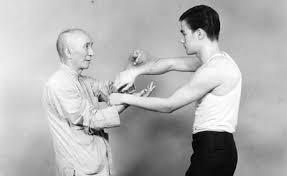
Do you think Bruce Lee developed JKD because Wing Chung is useless in real combat?
Absolutely not.
Wing Chun served him well for many years in many different situations. In a number of physical encounters after he became proficient in Wing Chun, he was never beaten. But once he got to the United States, with larger opponents and opponents with many different martial arts backgrounds, he realized that Wing Chun had its own limitations. (One of my favorite comments he made, to Taky, after he had started teaching Kareem Abdul Jabbar, was when he said something like, “Do you know what it’s like trying to do chi sao with someone when you’re looking at his belly-button?”)
Again, I think WC is very effective in real combat, and not just against WC guys. Bruce fought many non-WC guys. Yes, WC has its limitations, but so does every style or school. That’s why Bruce wanted to transcend styles.
The evolution
As far as I understand Bruce Lee started to modify Wing Chung before the fight with Wong Jack Man although this fight was a very significant spark. I’m I right?
Yes, Bruce started to modify his Wing Chun even in the early Seattle years (long before his fight with Wong Jack Man).
When I was taking classes full-time, he was teaching Wing Chun (although as I learned later, he had already modified it slightly). I went east to college in the fall of 1962, and only saw Bruce during that first year of college over Christmas vacation at the end of the year, but he was already by then full of ideas about how to expand his approach—-not just new techniques, but concepts—like broken-timing. By the time I stayed with him and his family in HK during the summer of 1963, he had evolved even further.
The fight with Wong Jack Man was over a year after that. When I met up with Bruce after the fight, I certainly got the impression that it caused him to re-think his approach, to realize that endurance could be a major factor in a fight. (Up to that point, none of his fights had lasted long enough for that to be a factor.)
Wong Jack Man Fight
From my various readings that fighting was decisive in implementing athletic preparation, do you think it may have also had an impact on the technical aspect?
Yes, I think that that fight was decisive in his implementing athletic preparation (especially running for endurance).
I’m not sure it had much impact on the technical aspects, other than to highlight that Wing Chun, although excellent for close-in fighting, was perhaps not ideal for opponents who stayed out of reach (or, like Wong Jack Man, were in total retreat).
I got similar information also from Peter that have emphasized several time how much athletic preparation was important after that fight introducing in his daily training endurance workout and jogging.

From Seattle to L.A.
Bruce Lee has made a major evolution in a few years from the JKD in Seattle to the latest in Los Angeles. I would say that, in particular, trapping has disappeared and mobility has improved. Can you explain why?
I’m not the best person to explain JKD, but my observation would be that once he realized that Wing Chun was great for close-in fighting (which was fine if your opponent closed with you, or didn’t dance away), but not if your opponent was dancing around, it was natural to want to improve mobility. (Even during the Seattle years, he studied films of great boxers—Jack Dempsey, Archie Moore, etc.—and learned a lot from them.) And once you make yourself more mobile, so you are fighting from a distance, perhaps trapping becomes of lesser importance—just another technique that’s available in the right circumstances.
The main priciples
What do you believe are the main principles of Jeet Kune Do?
To me, its core principles are
- to know yourself (and your strengths and weaknesses)
- to be open to anything that might help in the objective of prevailing in a physical encounter, not just a variety of different physical techniques but also psychological and situational.
(For me, one of the tragedies of his untimely death was that he did not finish the movie he started filming before he got side-tracked with Enter the Dragon—Game of Death. My understanding of his concept for that movie was that each level of the pagoda would force him to encounter a different style of the martial arts, with the final level—Kareem Abdul Jabbar—having no style. The encounter begins with Bruce getting tossed around like a rag doll. But then he sees that Kareem is wearing sunglasses because his eyes are super-sensitive to light, so he finally prevails by poking holes in the paper-screen walls to let more light in the room.)

The main technique
What do you think are the main techniques of Jeet Kune Do?
I never trained in JKD per se, so I can’t really say. But conceptually, JKD was as I understood it, beyond any particular technique. Having said that, I believe that Wing Chun remained a foundation of Bruce’s approach even as he evolved—e.g., straight Wing Chun-style punches were favored, even though in certain situations other punches (such as a hook) might be used because they were more effective.
Ground combat
Bruce Lee has also practiced Judo. Do you think it is correct to say that in Jeet Kune Do also the ground combat is part of it?
Yes, JKD conceptually includes all aspects of fighting, including ground combat.
For me this question was important as in the past I had several times a discussion with people saying that in JKD there’s no ground combat.
For my this is mainly related to the open-mindedness.
The art of fighting by Bruce Lee was born from an open mind and must be practised and taught with an open mind.
In the real fight we cannot set ourselves any limits and we have to train completely.
Obviously the goal will always be to manage the fight on your feet and avoid going to the ground… but you can’t predict in advance
Defence or attack
Is Jeet Kune Do more about defence or attack?
With the above caveats (I am not an expert in JKD), to me JKD does not emphasize one over the other. It depends on the situation. Also, a lot of JKD is about combining defense and attack—that is, an attack (or counter-attack) can be the defense.
Training
What do you think the main things to train are: technique, physical training, psychological training?
Obviously, some kind of technique is necessary in a fight, so certain basic techniques must be taught. As well, a certain level of physical ability is needed to employ the techniques, so some physical training is also necessary. Psychological training is more difficult. Although one’s mindset is important in a fight, it’s harder to train for that. To some extent, sparring with physical contact can help in that regard, as can philosophical discussions to some extent. Beyond that, I’m not sure.
The Jeet Kune Do today.
How do you see the current situation related to Bruce Lee Martial arts?
Not sure how to answer this. I certainly don’t profess to be knowledgeable about the current situation of the martial arts. All I can say is that from my perspective, Bruce has had a major influence on the martial arts in general, as it is taught, practiced, and perceived.
Original or Concept
What is the sense of talking about Original and Concept?
After Bruce Lee death many people start to open JKD class and a big confusion it was created on what is the Jeet Kune Do. (a style, a method, principles).
Some decide to keep and copy the teachings and movements of Bruce Lee and some to evolve adding new techniques.
In the first case, we talk about Original JKD and in the other is Concept. Also Dan Inosanto coined the term “Jeet Kune Do Concepts” in the 1980s to designate what he was teaching instead of saying that he was teaching JKD.
I think it’s a good question to ask what teaching JKD means. I’ve never met Dan Inosanto or seen his school, but it makes sense to me that he would say that he was teaching JKD concepts rather than JKD itself—especially since Bruce conceived of JKD as a Way that transcended styles. But that leads to the question of whether one can just teach JKD concepts in a way that makes someone an effective fighter. One must employ some techniques in a fight, and must learn them from someone, presumably his JKD teacher. I think it comes down to the teacher—if the teacher really understands the JKD concepts, then he can teach effectively with various specific techniques.
An excerpt from Dan Inosanto’s book “Jeet Kune Do the art and philosophy of Bruce Lee”
“Once Jeet Kune Do was established as an entity in itself, Jun Fan was looked upon as the art that Bruce taught in Seattle and Oakland – which was more Wing Chun oriented with additional kicking techniques.
Jeet Kune Do then is a “liberated form of Jun Fan” it encompasses much more, but Jun Fan is still part of the total art, You can’t separate the two”
Bruce Lee _ The Man.
The fighter
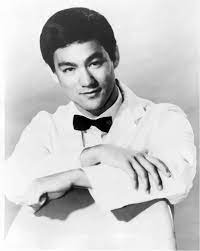
People say Bruce was not a fighter as there are no accounts of his fighting or competitions.
The implication that Bruce was not a fighter is complete bullshit.
He grew up in HK fighting on the streets (one reason he took up Wing Chun), and on the rooftops (with bare-knuckle fights between different schools). He had a boxing match he won in high school in HK (though after that he refused to enter competitions with rules). Once he got to the US he was more restrained, but still had a few matches (with a karate guy in Seattle, and Wong Jack Man), as well as numerous incidents which didn’t amount to full-out fights because he was able to control the situation so well and/or dispatch his opponent so easily.
Competitions
What about competitions?
After his boxing match in high school, he refused to participate in competitions with rules. His two fights in the US were bare-knuckle (no gloves) without rules (as to where you could strike or what kind of blows were permitted, although in his fight with the karate guy in Seattle they agreed that the fight would go three rounds, with each round lasting until someone was knocked down or knocked out). In his fight with Wong Jack Man, the fight was understood to be until one of them was unable to continue or conceded. Having said that—that Bruce refused to agree to any “rules”—in my opinion he did not actually employ any techniques that would be especially damaging, such as eye-gouging. I’m sure he would have if he felt it necessary, but he seemed to use only the amount of violence that was required under the circumstances.
Undisciplined student and a punk
In the back cover of the book is wrote that Bruce Lee was an undisciplined student and a punk who got into many street fights, do you refer to his life before he moved to the US or this is valid also after he left China?
The term “punk” was used by Ang Lee, the movie producer, who wrote a very nice blurb for me that appeared on the back cover of my book. He used the term to describe Bruce as a teenager in HK. I understand Ang Lee’s use of the term, but it’s not one that I have used. Bruce was certainly a delinquent who got in a lot of trouble as a youth, and he was somewhat undisciplined when he was in Hong Kong, but he had the grit and determination to grow beyond that.
Once he moved to the US he matured quite a bit, and as far as I could see he showed great restraint, plus amazing ability to deal with and control situations in a manner that did not involve violence except as a last resort.
The immortality
Bruce Lee’s name is still alive more than 50 years after his death. You were a close friend, what do you think makes him so special and immortal?
He was a charismatic person who was clearly talented, revolutionized the depiction of Asian martial arts in film, and through that medium introduced Asian martial arts (in particular gung fu) to the Western world. In addition, he had a philosophical vision of the martial arts that resonated with a lot of people.
Above the average
In the back cover of the book, as Peter, you also wrote that Bruce as a Martial Artist was just above the average. Can you better explain what you mean?
The reference to Bruce as being “just above average” as a martial artist, on the back cover of my book, again comes from Ang Lee’s blurb. The reference by Ang Lee specifically referred to Bruce’s ability when he was a teenager in HK. The blurb goes on to say in the very next sentence: “Then he moved to Seattle in 1959 and, over the course of five years, he transformed himself and martial arts completely.” This is similar to what his family said, as I quoted in the book—Bruce was “good to above average” when he left HK at the age of 18, and when he returned to HK four years later he showed a “very special talent that is rarely found on this earth.” I would concur with that statement. He was already an unusually gifted martial artist when I first met him in 1961 (two years after leaving HK), and continued to evolve (and improve) over the ensuing years of his life. There are many talented martial artists, but I have never seen another martial artist that I thought surpassed him, or was even at his level.
The arrogance
Bruce Lee is often described as an arrogant and very self-confident person. I would like to ask what Bruce Lee was like in reality.
In person, he was very confident of his abilities (with good reason), and consumed by his interest in the martial arts. His self-confidence and single-minded interest, coupled with his willingness to break with tradition, could come across as arrogance to some, but he was unfailingly polite and generous, and open to learning from every other person he came across whatever they had to teach.
Sigung Taky Kimura

Let me also raise a question related to another special person I had the chance to meet several times and train with in Seattle and in EU, Taky Kimura.
Very humble person, he never wanted to appear too much and get rich by exploiting the name of Bruce.
For the first time from your book, I read it should have appeared in the Game of death. I had read that he had given up on Bruce’s request. Please can you tell the story?
The last time I saw Bruce, in HK in October of 1972, he was in the middle of filming scenes for Game of Death. He had just filmed the fight scene with Kareem Abdul Jabbar. I believe he mentioned that he wanted to have Taky come over to play the part of the martial artist on one of the pagoda levels. Soon after that, Bruce got side-tracked by the opportunity to film Enter the Dragon, and died before he could get back to finishing Game of Death. If he had been able to, perhaps he would have prevailed on Taky to participate. Bruce could be very persuasive, and he was sincere in wanting Taky to be in the film. When he died, Game of Death was just an idea in Bruce’s head, plus a few fight scenes he had filmed before he got side-tracked. If he had been able to finish it, I have no doubt that it would have been his signature film.


In his dojo and seminars, Kimura always taught Bruce Lee’s early Jeet Kune Do and gave up on evolving with him. Can you explain why?
I’m not sure, but my speculation is that Taky was comfortable with what Bruce had taught him and that it fit Taky’s own strengths. He had spent years training with Bruce in what was basically a Wing Chun-based style, and was very proficient in it. After Bruce moved down to Oakland and LA, he would go back to Seattle from time to time, and I’m sure Taky made trips down to California; and Bruce wrote many letters to Taky about different aspects of his evolving “style.” But letters and even brief get-togethers cannot be a substitute for full-time training, and Bruce was constantly evolving. In addition, Bruce’s technical ability was phenomenal, and it was very hard for most others to duplicate a lot of things that he did. Bruce was fine with his students teaching what they had learned from him at an earlier point, as long as they did not mis-label it.
The L.A. legacy
In one of the final chap. you talk about Dan Inosanto school in LA but you don’t mention Richard Bustillo. As far I know they start together and afterward they decide to have their own school.
Was it an oversight or is there a reason why you only indicated Inosanto?
I certainly wasn’t trying to slight or leave anybody out when I mentioned Dan Inosanto but not Richard Bustillo. As I mentioned above, I have never met Dan Inosanto nor visited his school; nor have I met Richard Bustillo. From all I’ve heard, both Dan and Richard are great martial artists.
Conclusion
I don’t know about you but years later my thirst for information about Bruce Lee and Jeet Kune Do does not go away.
I have heard so much over the years that I am always looking for confirmation and anecdotes to piece together the huge puzzle of JeetKuneDo and its founder.
Several times I have stated it, to know Bruce Lee’s fighting philosophy one must know its origins and evolution.
I have been fortunate enough to train with Taky Kimura (the origins) and with Richard Bustillo and many others (the evolution), I have read the book “Bruce Lee-The Evolution of a Martial Artist” several times, and I have been fortunate enough to spend an entire weekend with author Tommy Gong, but that does not quench my thirst for discovery.
Although Doug is not a martial artist he was one of his earliest students, was fortunate enough to spend several times in Hong Kong with Bruce Lee in 1963 and 1972 and has always kept in touch. Contrary to what Doug may say to me he is a key witness to understanding the principles of Bruce Lee’s fighting system.
I found Doug’s response about the main techniques and what it means to teach JKD particularly interesting.JKD is beyond any particular technique.
JKD conceptually includes all aspects of fighting.
In JKD an attack can be the defense.
Bruce conceived of JKD as a Way that transcended styles…this begs the question of whether it is possible to teach the concepts of JKD.