Read or Jump On
Practical Guide to Jeet Kune Do in Italy according to Andrea Torres
A few weeks ago, my friend Andrea Torres left a video interview about what Jeet Kune Do is and the reality of this discipline in Italy. We therefore decided to create an extract, which I am delighted to publish.
I am posting the video below for those who would like to learn more.
From my point of view, what he explains describes the situation not only in Italy.
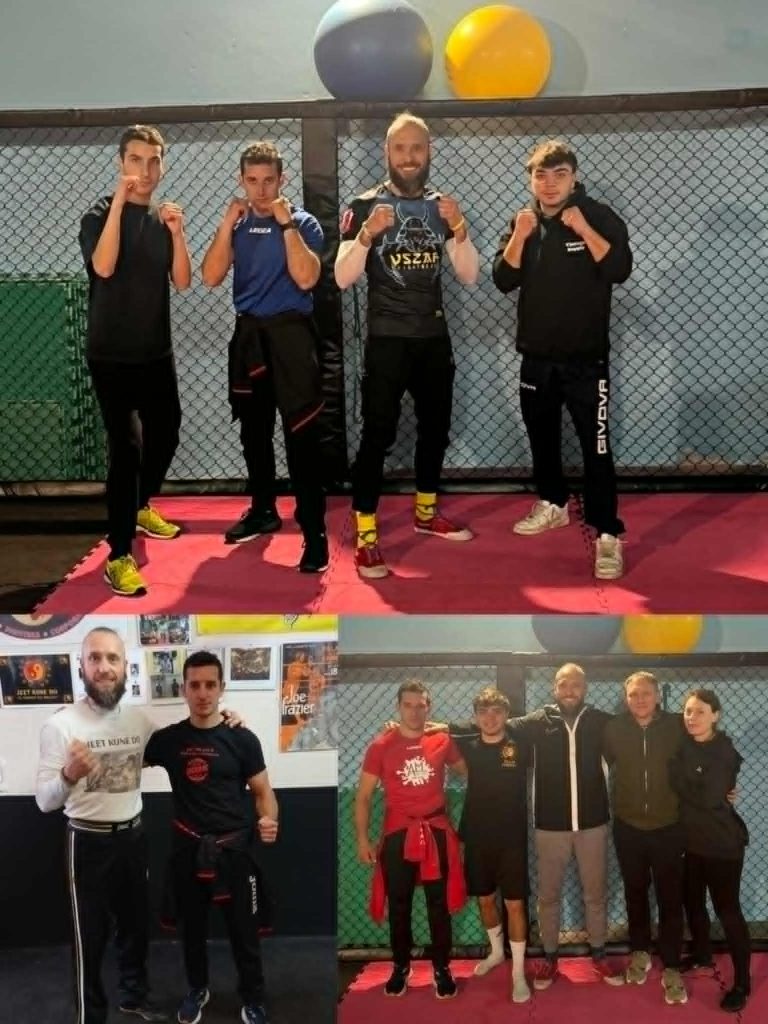
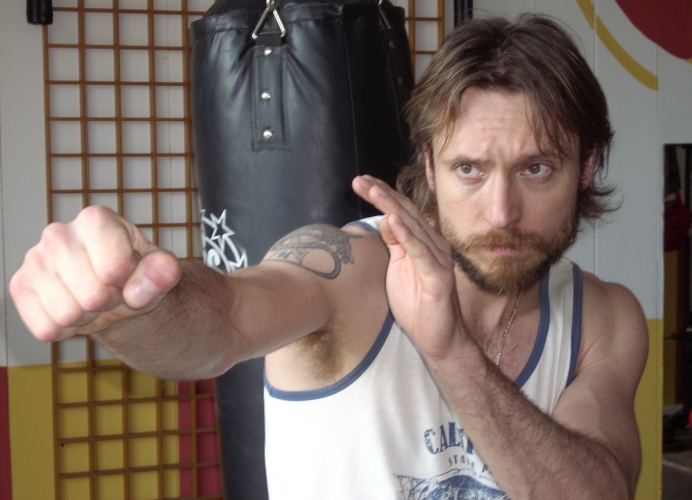
M° Andrea Torres
Andrea Torres, Italian Jeet Kune Do instructor, is probably one of the longest-serving and most consistently active instructors in Italy.
Andrea Torres is an Italian martial arts master specialising in Jun Fan Jeet Kune Do, the martial art founded by Bruce Lee.
Born in Turin in 1975, he began practising martial arts as a child, influenced by Bruce Lee films.
He practised wushu/kung fu, sanda (Chinese free fighting) and other martial arts before devoting himself to Jeet Kune Do.
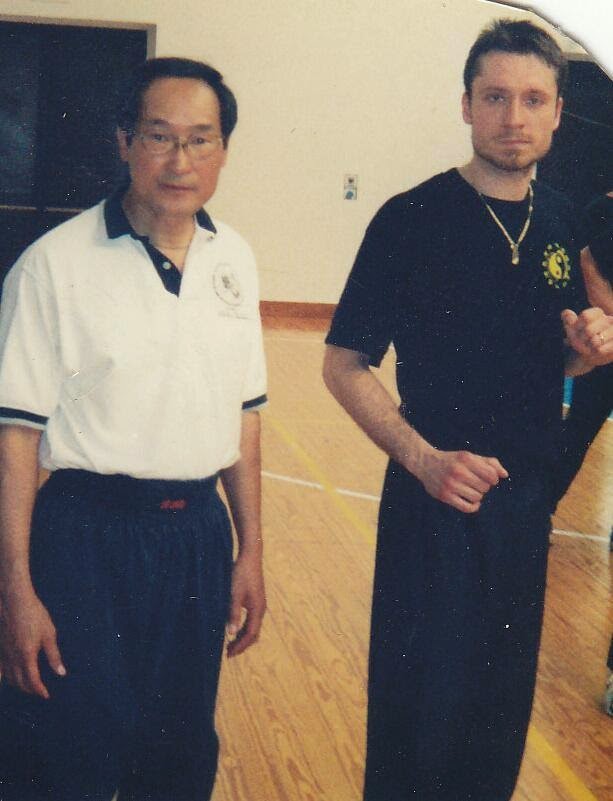
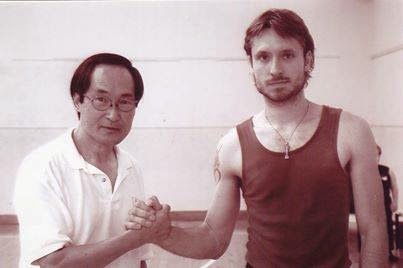
In 1996, he participated in his first training course with Ted Wong, a student of Bruce Lee considered one of the leading experts in original JKD.
He was an instructor and trained with several direct students of Ted Wong and later with Shifu Tommy Gong, Shifu Peter Chin and Shifu Leo Fong.
In 2003, he founded the association “Il Tempio dei Draghi” (The Temple of Dragons) to spread Jun Fan Jeet Kune Do in Italy.
In 2007, he contributed to the creation of the Jun Fan Jeet Kune Do Italian Organisation with other instructors to promote the art according to Bruce Lee’s realistic principles.
He is the national technical manager for Jeet Kune Do at organisations such the World Fighters Corporation and was also for CSEN
He holds courses, seminars and training sessions for instructors, focusing on practical application and self-defence.
He mainly works in Biella and the surrounding area, with numerous workshops and teaching sessions throughout Italy.
What is Jeet Kune Do (JKD)
Jeet Kune Do, created by Bruce Lee, is not just a fighting style. It is a concept, an approach to real combat and self-defence that favours what works and discards what is superfluous. Bruce Lee did not want to create a new traditional “discipline”: JKD was born as a response to the rigidity of classical martial arts styles, where codified sequences and predetermined movements often proved ineffective in real situations. JKD is not just a set of techniques, but a practical philosophy.
Andrea Torres explains that JKD is built on fundamental principles:
Fluidity: the body must move without blocks, adapting to the opponent’s rhythm.
Adaptability: techniques are not rigid; they change according to the opponent, the situation and the environment.
Functionality: every movement has a practical purpose, not an aesthetic one. Effectiveness is more important than spectacularity.
Personalisation: each practitioner develops their own style based on the principles of JKD, adapting it to their own physical and mental characteristics.
Athletic training: real combat requires good physical preparation.
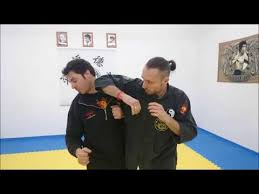
JKD integrates elements of boxing, Asian kicks, kung fu, footwork and trapping techniques, as well as the often-neglected ground fighting. It is an “open” martial art, where theory translates into real practice, both in the gym and in self-defence on the street.
How to find an instructor
Finding a serious JKD instructor is not easy. Andrea Torres highlights some fundamental criteria:
Direct lineage or reliable certifications:
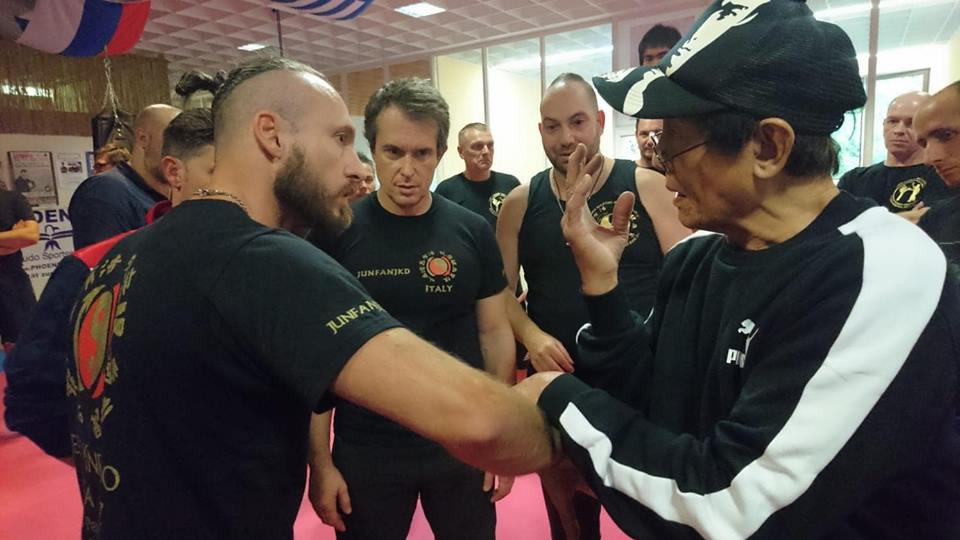
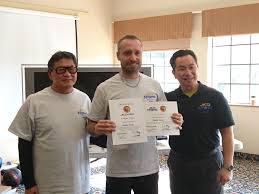
The most qualified instructors have direct contact with first and second generation masters such as Peter Chin, Tommy Gong, Leo Fong, Taky Kimura, Richard Bustillo, Dan Inosanto and Ted Wong.
In Italy, there are few instructors certified by first-degree students; most belong to later generations, and not all have had complete training.
Practical and real experience:
It is not enough to have titles or diplomas: the instructor must have experience in real sparring, combat sports or self-defence situations.
Torres recounts having dealt with street assaults and security work, demonstrating that theory without practice is not enough.
Transparency and discussion:
A good instructor answers questions, explains their experience and encourages discussion among students.
They must know how to teach principles, not just moves, and stimulate the growth of practitioners.
Evaluate the teaching method:
Be wary of those who focus only on controlled drills or aesthetic exercises.
A true JKD instructor integrates drills, realistic sparring and practical adaptation.
How to spot an unqualified instructor
Not everyone who calls themselves a JKD teacher is reliable. Andrea Torres identifies clear signs:
Distant or unverifiable lineage: many instructors present themselves as “heirs” to previous generations, but often their training is neither direct nor documented. Participation in a workshop does not make an athlete a certified instructor.
Focus on aesthetics and spectacle: if lessons consist only of choreographed sequences with no real application, then authentic JKD is not being taught.
Absent or overly limited sparring: those who avoid real contact or only work with cooperative partners limit learning. Sparring is essential for understanding timing, distance and opponent reactions.
Lack of discussion and updating: a good instructor encourages discussion, practical tests and continuous updating.
In practice, a serious instructor conveys experience, principles and adaptability, not just visually effective techniques.
How to practise JKD in a sporting context
JKD can be adapted to combat sports, but with some precautions:
4.1 Drills and targeted techniques
Drills are exercises aimed at perfecting specific movements, such as hooks, kicks, footwork and combinations. Torres considers them fundamental because they allow techniques to be automated.
4.2 Realistic sparring
Real sparring simulates the pressure of a real fight, with unpredictable and reactive opponents. This is where JKD shows its effectiveness:
Use of all available “weapons”: punches, kicks, elbows, knees.
Work on both guards, right and left, to deal with left-handed opponents or changes of angle.
Constant pressure, forcing you to react quickly and adapt.
Ground fighting, as you cannot rule out falling into a street fight and must be prepared to react.
Torres emphasises that those who train only with controlled drills do not develop the necessary mental switch, i.e. the ability to adapt immediately to the variables of combat.
4.3 Integration with combat sports
JKD can also be practised in sporting contexts, such as boxing, kickboxing or MMA. Andrea Torres recommends:
- Integrating JKD principles into the sporting context, adapting techniques and strategies.
- Training the left guard and angles to develop balance and responsiveness.
- Using real contact sparring whenever possible, with protective gear, to test practical applications without excessive risk.
Street experience
Andrea Torres recounts his direct experience in real-life situations:
- He has worked in clubs in Turin and in areas with high levels of drug use and aggression.
- He has been involved in dangerous situations involving knives, where his training, agility and quick thinking enabled him to avoid serious injury.
- These experiences have taught him that JKD is not just theory: you need to know how to react under pressure, use all the tools at your disposal and adapt to the situation.
The reality of the street is more unpredictable than sport: weapons, multiple attackers, confined spaces. Training with realistic sparring and functional drills allows you to transfer JKD skills to real-life situations.
Descent, passing on traditions and building a group
Torres emphasises the importance of lineage and continuous training. A serious instructor must have:
- Direct knowledge of the principles of JKD, through first-generation masters or certified instructors.
- The ability to teach techniques, strategy and philosophy in a consistent manner.
- A willingness to engage in discussion, share experiences and constantly improve.
Torres’ goal is to create a group of advanced instructors in Italy who are capable of passing on authentic JKD, preventing it from becoming a collection of isolated moves or choreographed performances. This group would work on all aspects: boxing, footwork, legs, trapping, wrestling, athletics, and real application.
Practical conclusions
According to Andrea Torres, JKD is not a martial art to be watched or imitated: it is to be lived, tested, adapted and passed on.
To practise it correctly in Italy:
- Study the fundamental principles: fluidity, adaptability, functionality and pragmatism.
- Find a serious instructor: verifiable lineage, real experience, ability to compare.
- Train with drills and realistic sparring: learn to react under pressure, with all the tools at your disposal.
- Integrate sport and self-defence: adapt techniques and strategies to sport without losing the essence of JKD.
- Be aware of reality: train in realistic simulations, preparing your body and mind for unpredictable situations.
- Continuous growth and sharing: engage with other practitioners, teach, keep up to date and pass on the authentic principles.
Torres’ final message is clear: JKD is not just punches and kicks, but a way of life and mental and physical training, capable of adapting to any context. Only in this way can it be effective and consistent with Bruce Lee’s principles. The principles of JKD are applicable on the street as well as in combat sports.