


Read or Jump On
Peter Chin – The Last Disciple
It has taken me some time to write and publish this article, an article I particularly care about and for which I feel honoured and fortunate.
Peter Chin, one of Bruce Lee’s closest friends, until a few years ago hidden in the shadows, has finally published an important testimonial book on Bruce Lee and JKD Jeet Kune Do.
A great little book like never before.
Chin remained in the shadows not by chance. He was so affected by Bruce Lee’s untimely death that he suffered a severe depression that kept him out of the spotlight of Lee’s legacy. A story reminiscent of another person who had enormous respect for Bruce Lee and his teachings, Sigung Taky Kimura, who did not want to make his acquaintance with Lee a business.
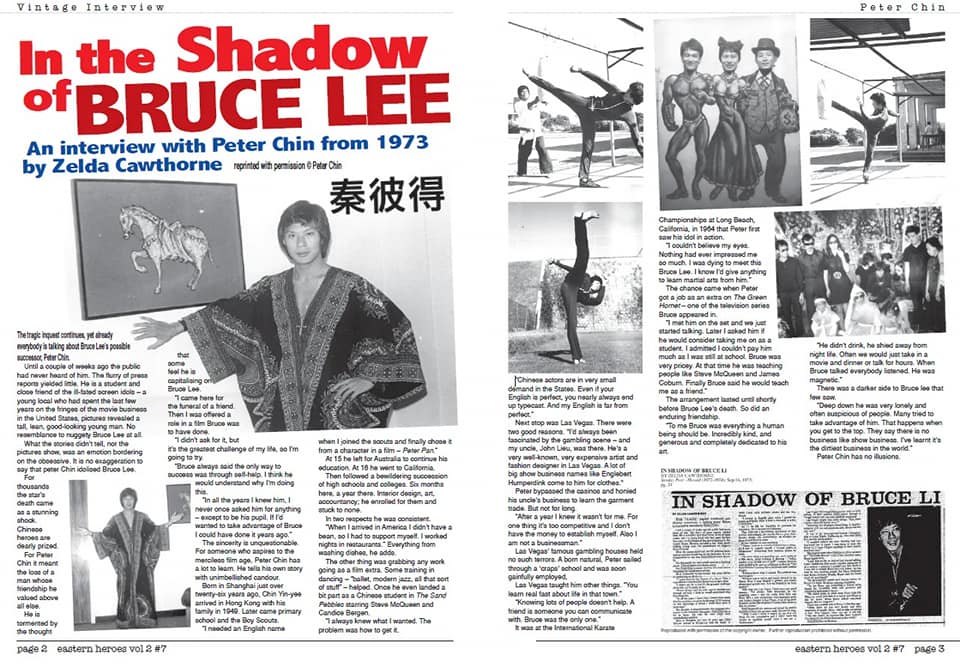
In the book, written with the support of Tommy Gong, Peter Chin talks transparently about his relationship with Bruce Lee, narrating intimate moments from which important characteristics of Sijo and the philosophy behind Jeet Kune Do emerge. In a clear and direct manner, he puts a clean point on all the chaos that arose after Bruce Lee left us, firmly judging the current promotion of Lee’s teachings. I have read almost every book on Bruce Lee and JKD Jeet Kune Do but never had anyone been so clear showing great respect and love for the Master and friend and a complete disregard for the commercial aspect of having been his student.
Linda Lee in the preface to the book tells us that this is distinguished by the special relationship between two friends, reading it will give you a unique and personal perspective of Bruce Lee. Bruce considered Peter more of a friend than a student.
I am so excited for Peter.
A few days ago he informed me that the Spanish version is almost ready to be uploaded to Amazon Spain.
But most importantly, the Chinese version has started selling and Peter is going to China to sign the book.

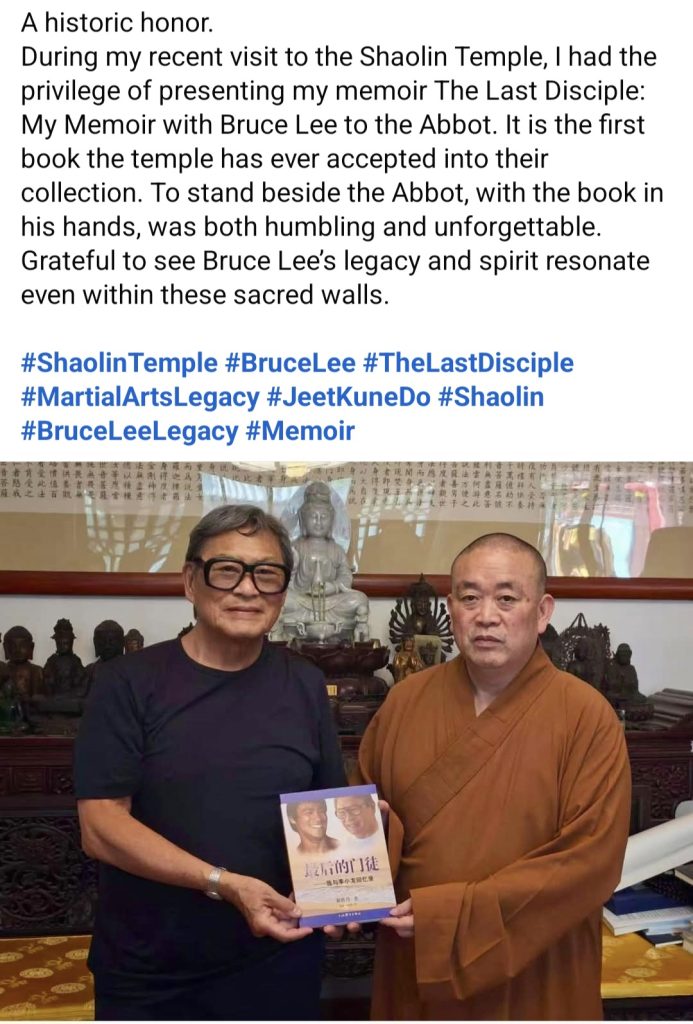

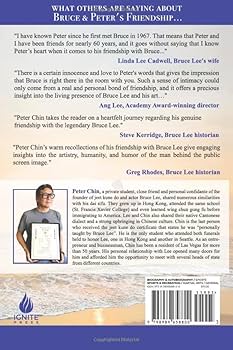
Peter Chin
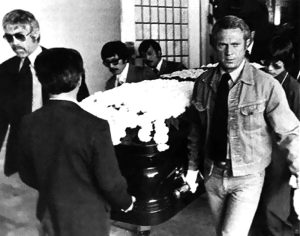
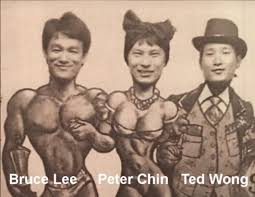
Very little is known about Peter Chin other than that he is one of the few who received a certificate directly from Bruce Lee and that he was one of the undertakers of Sijo Lee’s body; along with him are Taky Kimura, Steve McQueen, James Coburn, Dan Inosanto and Bruce’s brother Robert.
In fact, Peter and Sijo Lee have a life full of similarities. Both come from Hong Kong, where they attended the same school, both like dance (cha cha). Both practised Wing Chun gung fu before immigrating to America. Their similar culture and being able to speak to each other in the Cantonese dialect allowed them to have a closer relationship.
Although they had met before, their friendship began in California where Peter Chin attended private classes in Bruce’s home with Ted Wong and Herb Jackson as a ‘friend’.
Peter was the only person to be present at both Bruce Lee’s funerals in Hong Kong and Seattle.
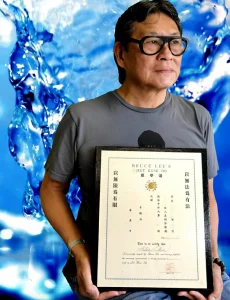
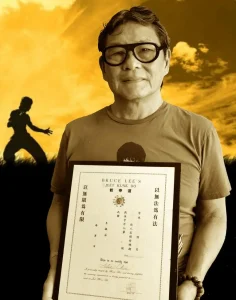
Important things received from the Lee family
Peter Chin received the First Rank certificate on 14 August 1968, directly from the hands of dai Siju Bruce Lee. Peter Chin practised with Bruce Lee for about 110 hours and believes he received the certificate mainly for understanding his martial arts philosophy through long talks in Cantonese and their shared past.
In November 1975, Chin received from Linda Lee a copy of the book Tao Of Jeet Kune Do with a profound dedication attached from which the strong bond between the two emerges. Linda’s dedication is very simple and short, but it contains many profound meanings. As Peter is doing with me now, at the time Linda wrote to Peter Chin to read the book in order to understand him and help him in his growth.
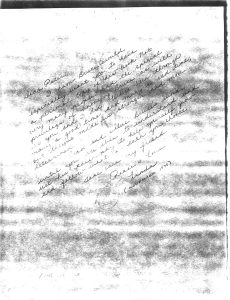
Dear Peter,
I know that Bruce would especially want you to have a personal copy of this book. Not many people have had the special privilege of knowing Bruce as well as you and I have. We have been through many good times and many sad times, but they have made us stronger and more determined.
Read and value Bruce’s words until you are able to understand and use his philosophy to help you grow and follow whatever path you choose.
Take care of yourself, my friend.
Peace and love
Linda
(November 1975)
Intro
I personally had the honour of meeting Peter on a weekend in Venice at the Martial Hero Award thanks to two of his students, friends of mine, who introduced me to the event: Sifu Michael Inzana and Sifu Andrea Torres.
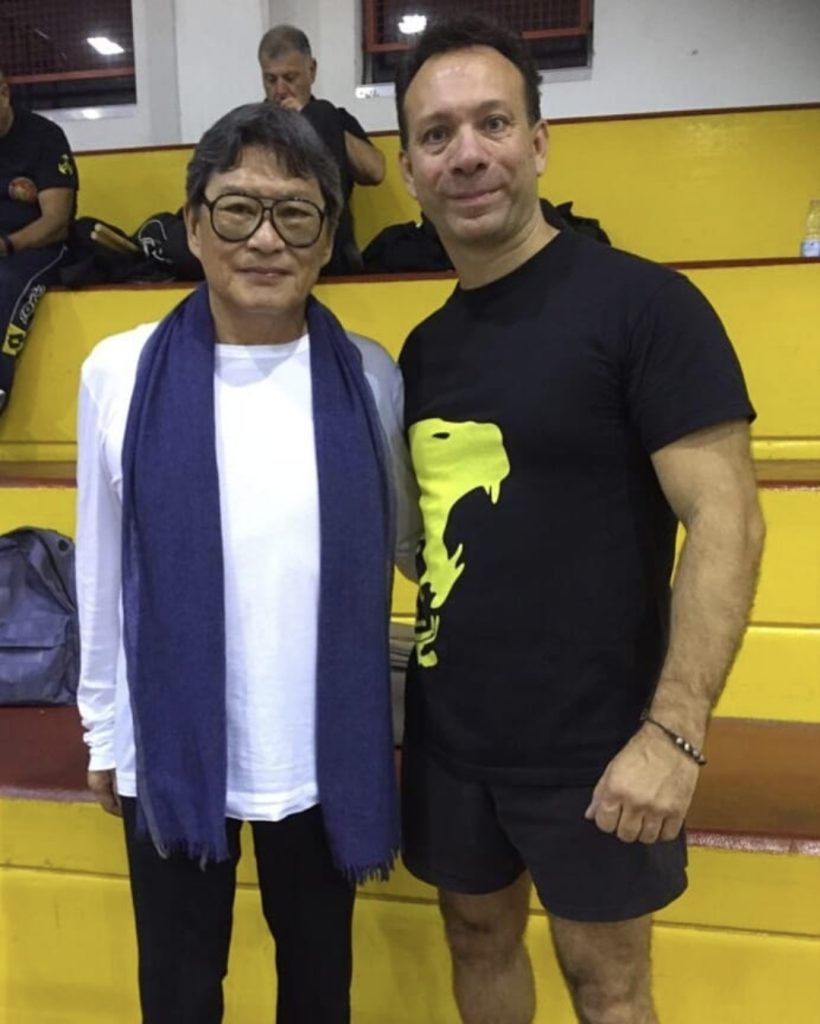
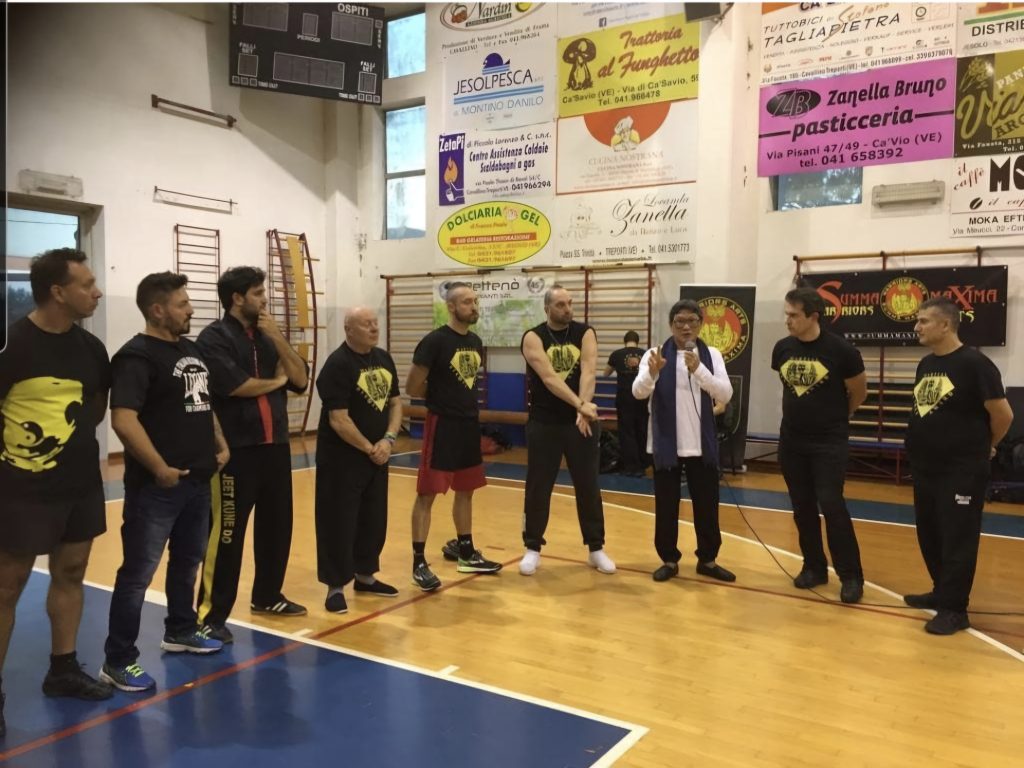
Upon hearing about the release of his book, I immediately bought a copy, and later also a second Kindle copy. I could not help but try to contact him to ask him to answer some questions for my blog.
In one of our first communications I had written to him: ‘I know that some of the questions are already answered in your book, but as you can imagine, the purpose of the interview is to try to get some personalised answers and (perhaps) additional information to go deeper into the topic. My blog is based on the principles of Jeet Kune Do and Bruce Lee’s philosophy and as you say there is a lot of confusion about it, that’s why your testimony is very important to me, in my own small way, with my blog, I try to bring some clarity.’
The approach
Peter Chin was from the outset very kind and helpful but despite my premise I have to admit that it was not possible to get the answers as I would have liked them because, as he rightly pointed out to me several times, the answers to my questions are all present in his book and I would have found them only by careful reading. To sum up his words: ‘all the answers to your questions are in the book, which is why I ask you to read the book until you understand it. I am not sure whether you are having difficulty understanding it because of the language or you refuse to understand it, which I have found to be normal among different JKD groups.’
Yes it is true English is not my mother tongue and sometimes I have to reread several times and/or translate to be able to understand the concept but I would also add that this response of his reflects the essence of what I loved most about his book (ch. 16 which we will discuss later): Or you refuse to understand it, which I have found to be normal among different JKD groups.
Yes exactly, this is the essence of it all, a subject I myself have often been in discussion about and on which I have already written articles.
What is JKD Jeet Kune Do?
For the record my answer was: ‘I am a humble person … Your words are a life lesson for me.
The main books
I have an important library on Bruce Lee and JKD Jeet Kune Do but I would say that the main books are three: the one of Tommy Gong, the one of Sifu Marcelo and especially the latter by Peter Chin.
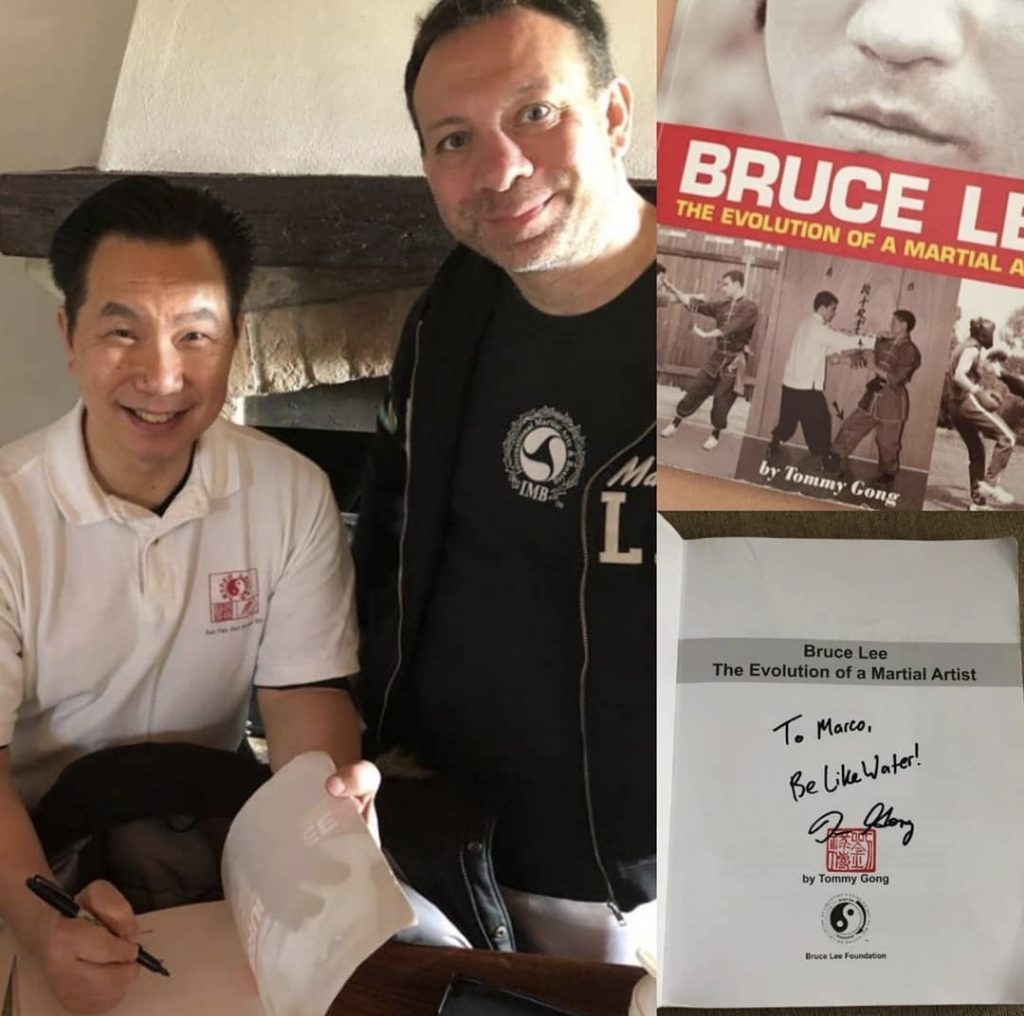
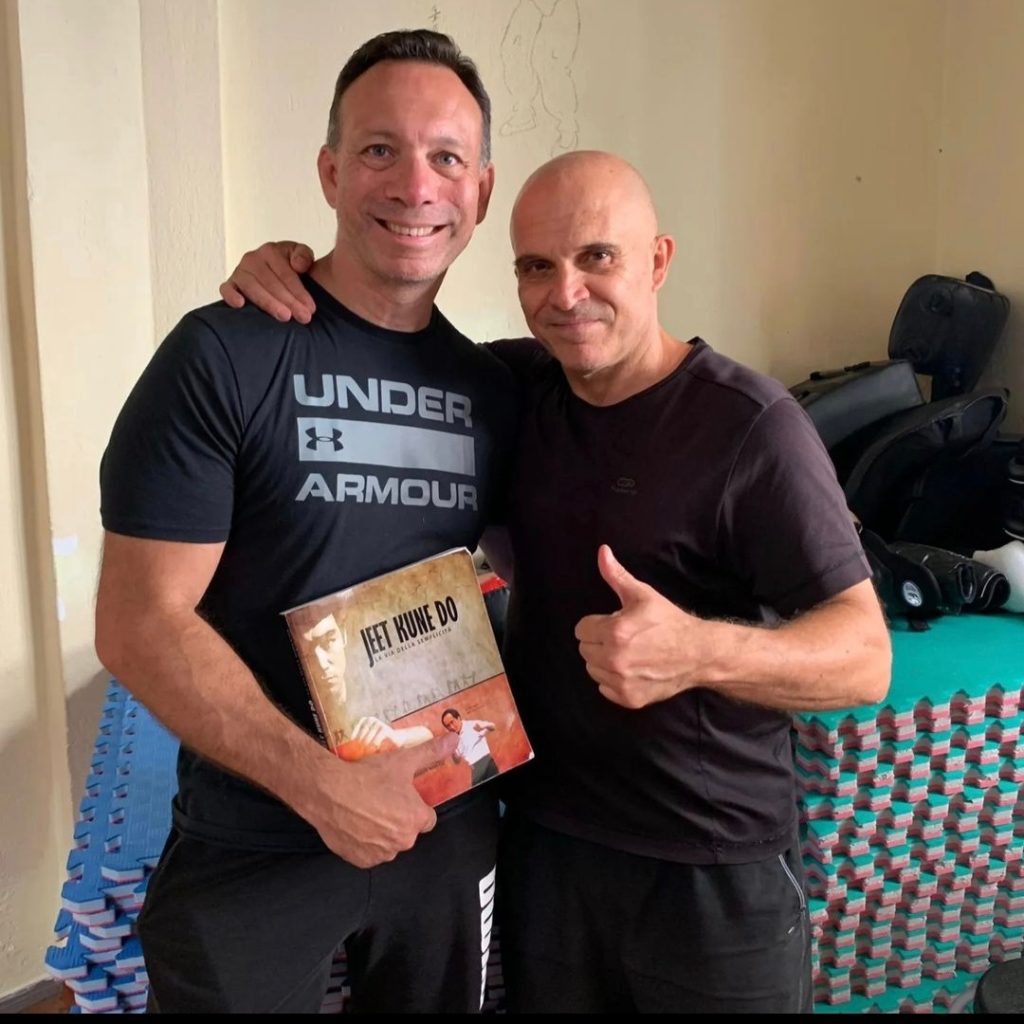
Chin also clearly told me that it would always be better to handle this kind of ‘questioning’ situation face-to-face. It is much easier to handle than writing. Obviously the distance did not help but I really appreciated his helpfulness and hope one day to have the honour of meeting him again.
The interview article
As a result of my communication with Peter Chin, and my reading of his book, I report here the answers to the questions I asked him regarding Bruce Lee and the art of JKD Jeet Kune Do. In the text I will try to keep intact the words used by Sifu Chin (in brown) because for me they denote his personality, confidence and strong respect and connection to Bruce Lee.
I would like to point out that the article has been review a four eyes with Peter and one of the main modification he request to me was to don’t adresse to him like Sifu. He told me: I don’t teach … I only explained …I feel more comfortable if you address me as Peter.
Bruce Lee was unique
In one of my emails I wrote: I would say that Bruce Lee was above average (average is an offensive word for Bruce). He was able to leave a mark not only in martial arts but also in fitness and films.
Peter rightly wanted to emphasise that talking about average when talking about Bruce Lee was offensive. I absolutely cannot blame him. To date, to my knowledge, I know of no man who has been able to do as much as Bruce Lee has done in just a few years:
- He disrupted centuries of traditions in the martial arts by stepping outside the box and giving freedom to combat.
- He broke cultural boundaries by introducing Chinese martial arts and Asian philosophies to the world.
- He created a new way of making martial arts films by bringing the realism of combat to the big screen.
- He has been at the forefront of fitness and body building by trying hitherto unknown training methods on himself that have inspired great champions such as Arnold Schwarzenegger.
The questions
Coming to my questions and my chat with Peter Chin:
I apologise in advance if some questions may seem provocative and repetitive.
Marco, basically all the answers to your questions are in the book that’s why I really don’t feel like answer your questions except to ask you to read the book again and again until you get it. The only reason I am writing this to you is I am not sure if it’s because English is your second language that you are having a hard time to understand it. Or you just refuse to understand it which I found it’s normal among the different JKD’s group depends on your linkage and generation.
Bruce Lee the Immortal
Bruce Lee’s name is still alive more than 50 years after his death. You were a close friend of his, what do you think makes him so special and immortal?
In the book, however, Peter also makes a sad complaint: JKD continues to be popular because people are exploiting Bruce’s celebrity.
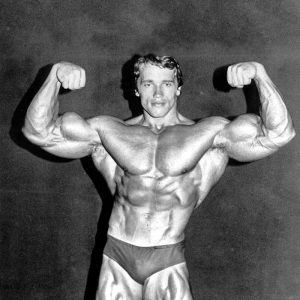
There are plenty of people who do all those moves and have the skills, but they don’t look as visually credible or impressive as Bruce Lee did.
Arnold Schwarzenegger
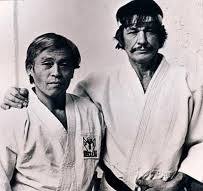
I didn’t hang out with Bruce Lee very much…rarely…along with James Coburn and Steve McQueen who took lessons from him…but I did practice Karate with Master Tak Kubota who once told me about Lee… ‘many people oppose him because Lee somehow offended martial traditions… But for sure this Lee is a great and prepared martial artist…and he is also a terrible fighter, he is fast, powerful, agile and cunning…he is intelligent and moreover he is a natural talent who has cultivated his gift by training scrupulously and scientifically…This Bruce Lee is ahead, very ahead…’
Cit. Charles Bronson interview 1979
The arrogance
Bruce Lee is often described as an arrogant and very self-confident person. I would like to ask what Bruce Lee was like in reality
read page 116 until you get it
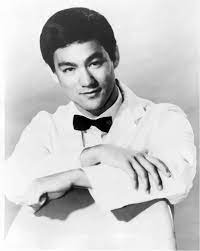
In the book, Chin himself writes that his first impression during his first meeting with Bruce Lee was of a person who was a bit cocky or arrogant, but who knew what he was talking about and could back up what he said.
Later in the book we read that Bruce avoided crowded places because he did not like to socialise. At the same time, however, he was a charismatic and sincere person and liked to joke around. We also read that he was a principled person who did things primarily for pleasure and not for money.
It must be understood that Bruce Lee was immensely successful in a short space of time and this made it difficult for Bruce Lee to manage social relationships. People sought his friendship out of interest. It goes without saying that the arrogant attitude that some people described was to protect his privacy…moreover, he was in a position where he could certainly flaunt an attitude of superiority. I personally do not believe that Bruce Lee was an insolent and overbearing person.
It’s indicative of one of his phrases:
if I tell you I’m good you’ll probably think I’m bragging, if I tell you I’m not you’ll think I’m lying.
Bruce Lee
JKD Jeet Kune Do, why?
Does Peter think Bruce Lee developed JKD because Wing Chung is useless in real combat?
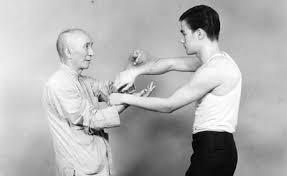
For Bruce Lee, the encounter with Wong Jack Man In Oakland was a wake-up call and the beginning of evolution. Despite his victory, one can read in other books (Linda Lee-Bruce Lee Dragon and Tommy Gong-The evolution of a Martial Artist), Bruce went into a sort of ‘depression’ as he was disappointed with the fight. (In Tommy Gong’s book, there is a chapter dedicated to that event with Linda’s testimony).
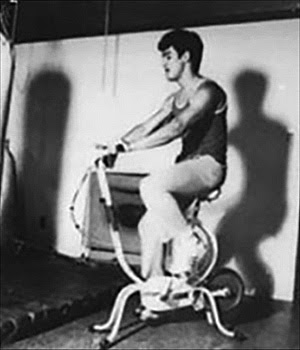
At that time he realised that Wing Chun was lacking something, it was very good at short distance but otherwise it was limited he needed techniques that would work against any kind of opponent, not just a wing chun practitioner. In addition there was the athletic aspect, the fight had lasted three minutes but Bruce had run out of breath, so he started to incorporate aerobic training into his work out.
JKD Jeet Kune Do a martial art or philosophy
What is JKD Jeet Kune Do? Is it a style of martial arts or a philosophy of fighting and life?
Please read page 68 and revisit Pierre Berton BBC interview. So many answers were there as I stated at the beginning.

Bruce did not only want to promote martial arts but he wanted above all to promote a way of life to try to unite people. We must not forget the Ying-Yang philosophy, which Bruce never abandoned (see the JKD Symbol), and the fact that Bruce Lee suffered much discrimination in both Hong Kong and America.
Gung fu is a way of life, a philosophy whose first goal is health and then defence.
The goal of Jeet Kune Do is to simplify things and not complicate them.
The book contains some interesting philosophical teachings that Peter Chin learned from Bruce Lee. The last of these, but not least, is Bruce Lee’s best known motto: Walk On
JKD Jeet Kune Do, principles
What are the main principles of JKD Jeet Kune Do?
here you go again, it’s in the book
Jeet Kune Do is just a name.
This must be clear to readers, Bruce Lee also writes it clearly in the “Tao of JKD”.
To understand JKD one must have an open mind, “Using no way as a way, having no limitation as a limitation”.
Peter in the book recommends watching the videos of the sparring demonstration in Long Beach where you can see, among other things, the importance of managing distance and the ‘gap’.
Another important aspect is not to think in the fight but to feel “empty your mind be formless. Shapelless like water”. We do not move first but react to the opponent’s movement.
JKD Jeet Kune Do, the evolution
Bruce Lee has made a major evolution in a few years from the JKD in Seattle to the latest in Los Angeles. I would say that, in particular, trapping has disappeared and mobility has improved. Do you agree? Can you explain why?
I never heard the word Trapping from Bruce and again the answer is in the book
In the book it can be read that apart from practising Chi Sao as a warm-up, Peter never trained trapping unlike how it was taught in the Seattle and Oakland days.
JKD has evolved over the years and Peter Chin started practising with Bruce Lee in the ‘third’ era, the Los Angeles era.
Tommy Gong’s book – The Evolution of a Martial Artist explains Bruce Lee’s journey very well and divides the path into four main stages:
- Hong Kong
- Seattle: absorb what is useful and create the foundation
- Oakland: reject what is useless (the birth of Jeet Kune Do)
- Los Angeles: add what is specifically yours
JKD Jeet Kune Do, the main techniques
What do you think are the main techniques of Jeet Kune Do?
no techniques-just start with jogging everyday again it’s in the book
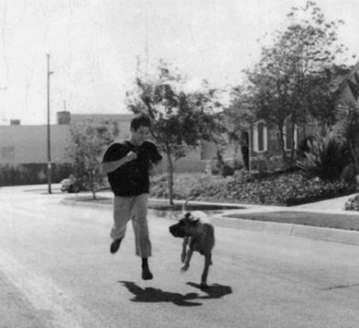
Peter tells us in the book that Bruce Lee ran every day, even in the rain. An obsession born after meeting Wong Jack Man in Oakland. One can read this in various books about the Little Dragon.
Jogging is useful for improving the core from where the power and speed of blows originate.
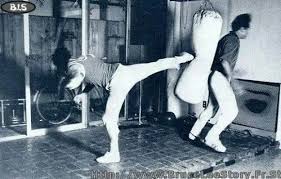
The concept is that good athletic preparation is important. For Bruce Lee, legwork was essential for mobility, agility, distance control and generating power in strikes.
Kicks are important because legs are longer and bigger than arms and therefore can create more damage. Bruce’s most powerful weapon was the Side Kick
I don’t fear the man who has trained ten thousand kicks, I fear the man who has only trained one kick ten thousand times
Every person is different physically and everyone has different experiences, as a result everyone has to use the techniques that suit them best. Jeet Kune Do is different for every person, Bruce defined basic concepts that everyone must be able to adapt to their own person. This also applies in everyday life.
The JKD Jeet Kune Do today
I like Chapter 16 from which I was very impressed.
He wrote that Bruce was very clear about it. How could his disciples turn JKD into such a mess? Bruce was the JKD. The only people who can claim anything are those who have received a certificate from Bruce. That does not make me an original JKD, but one of Bruce Lee’s original students. I believe that currently JKD has gone backwards instead of evolving forwards.
Can you explain what you mean by ‘backward’?
Still practicing from Seattle, Oakland and JKD period and absolutely not a single one talking about the importance of ATHLETIC SCIENTIFIC PHYSICAL TRAINING, WITHOUT THIS THE TECHNICS WILL NOT BE EFFECTIVE
Original or Concept
What is the sense of talking about Original and Concept?
Read Ang Lee’s forward again, his forward had summarized my whole book and your questions
Ang Lee is an Oscar-winning director, producer and screenwriter.
In his introductory words to the book, he sums up the contents very well and dwells on the concept of Original and Concept. Bruce Lee is the Jeet Kune Do original.
Jeet Kune Do is a living, evolving philosophy, everyone must know how to build their own Jeet Kune Do.
Jeet Kune Do is not only a fighting philosophy but it is also a philosophy of life.
Bruce Lee possessed a winning combination of theory and practice. His main characteristics were:
- Photographic memory
- Knowledge of anatomy
- Knowing how to take care of his body
He was a master
JKD Jeet Kune Do an art of defence or attack?
Reading Chapters 9 and 10 I would say that JKD is a method of defence because, in my opinion, we should react to an attack… and intercept first. Is JKD Jeet Kune Do more about defence or attack?
again it’s in the book.
There is no defense in JKD, if you have defense there will be two moves, ” defense then offence” The offense is the defense “ONE MOVE”
In the book, Peter talks about when he asked Bruce Lee in his first lesson what JKD was, his answer was practical. He made it clear that defence is offence.
JKD has no defence, simply in one movement of offence you create the defence. The two movements of defence and attack merge into one movement.
Below is a clip I made a few years ago to show the difference between traditional styles and JKD.
Bruce Lee and competitions
In Chapter 11 he writes that Bruce did not compete because he had a killer instinct. This can be applied to many fighters and if we follow this way of thinking, nobody would train in a real way anymore. Bruce introduced protection to make training realistic, so why avoid fighting and competition?
because competitions have rules and regulations
Bruce Lee fought many fights with few rules on the streets and rooftops of Hong Kong. He also won boxing competitions in his college days.
In the famous fight in 1964 in Oakland with Wong Jack Man, Bruce Lee demanded that there be no rules.
Training JKD Jeet Kune Do
Reading your book you wrote: pay more attention to physical-athletic training. Do you think the main things to train are: technique, physical training, psychological training?
spend more time on the physical part 80% against 20% technics
Bruce Lee’s success is mainly due to his perseverance and hard work. Bruce Lee was the ultimate in fitness. Bruce believed that in martial arts, too much emphasis was placed on technique and too little on athletic training.
One reading I recommend is ‘Bruce Lee – The Perfection of the Body’ where his training methods are exposed and one is introduced to his mental discipline that guided him to his continuous refinement Here one finds an introduction by Linda Lee who again refers to the Oakland episode with Wong Jack Man.
Linda tells us that JKD includes the training of the body as a means to reach the maximum expression of one’s potential.
Understand JKD Jeet Kune Do
To fully understand JKD we must start with what Chinese Gung fu is. The first purpose is health and the second is self-defence. Can you give a more in-depth explanation of this concept?
It’s exactly what it means, one must have health ” physical” before one can defense oneself
Peter explains in the book that the Chinese martial art originates from Chinese culture. In martial philosophy, much of Chinese culture and morality is absorbed. Martial arts philosophy is seen as a means to improve oneself, both physically and spiritually. Martial principles include balance and harmony, softness overcoming hardness, adaptability, perseverance, hard work, ethics and morality.
Loyalty and honour are fundamental qualities. They set a high moral standard and instil virtue in the Martial Artist.
How to improve oneself:
There is always something good and something bad in people- It is up to you what to take the good and forget the bad part, this is how to improve yourself.
Bruce Lee
Conclusion
What can I say…I am thrilled and excited by this article, the frank and direct exchange I had with Peter and his enthusiasm in talking about Bruce Lee.
I had the chance to hear Peter again later and each time he made me smile because in re-reading the article he apologised several times for his dry answers and for referring me back to the book or for answering ‘again’ too often. Honestly, I wanted to leave his answers unedited because I personally found them stimulating and also, as written at the beginning, they denote his personality, confidence and strong respect and bond to Bruce Lee. Not least in my opinion they make one understand the sceptical attitude towards those who talk about JKD today. However, I also like the fact that Peter re-reading the article congratulated me several times for demonstrating my knowledge of the subject and my commitment
Writing this article and re-reading Peter’s book and also other books on Bruce Lee and JKD Jeet Kune Do several times has been enlightening. As much as I think I know Jeet Kune Do, I realise that there is always so much to learn.
I realise how much ignorance there is out there. Of how many sell themselves as JKD instructors but then miss the fundamentals. So many Jeet Kune Do teachers teach things that are too complex, forgetting that JKD is simple and that defence is offence. The two movements of defence and attack are a single movement. So many JKD Jeet Kune Do courses concern themselves with techniques but forget about athletic training.
I was once told that Jeet Kune Do is not for everyone as it requires a different commitment from other disciplines. Because its difficulty is hidden in its simplicity… and its simplicity is precisely its difficulty. To think that you can find Jeet Kune Do instructor courses from one weekend even for those with no martial arts experience.
Walk on




This is really interesting, You’re a very skilled blogger. I’ve joined your feed and look forward to seeking more of your magnificent post. Also, I’ve shared your site in my social networks!
This is my first time pay a quick visit at here and i am really happy to read everthing at one place
Good post! We will be linking to this particularly great post on our site. Keep up the great writing
“Your writing style is engaging and clear, love it!”
“This article is really informative and well-written!”
“This is exactly what I was looking for, thank you!”