Read or Jump On
WHY FOCUSING ON WINNING CAN HINDER YOUR PERFORMANCE
INTRODUCTION
Here is an article that I’m not quite sure where to place – so to speak – because we won’t be discussing physical techniques for combat and self-defence, nor how to train physically; instead, we’ll be talking about a primarily psychological method for improving combat techniques and building self-confidence under pressure.
The method outlined in this article aligns with the principles of Bruce Lee and Eastern martial arts (Kung Fu and Bushido).
Emanuele, with his ‘flow’ method, has succeeded in defining the activation codes and creating a method to achieve flow.
In psychology, flow, or optimal experience (often referred to as ‘competitive trance’ in sporting terminology), is a state of consciousness in which a person is completely immersed in an activity.
FOREWORD
Jeet Kune Do
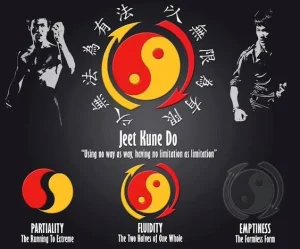
Among the principles of Jeet Kune Do and Eastern martial arts (Kung Fu), frequent reference is made to:
“Be water, my friend” – Bruce Lee
The famous phrase “Be water, my friend” is a philosophical metaphor associated with Bruce Lee, used to describe a mindset based on adaptability, flexibility and freedom from conditioning. The central idea is to learn to move through life with the same naturalness as water: capable of changing shape according to circumstances without losing its own nature.
Fundamental principles of the “Be Water” philosophy
Adaptability and flexibility
Water can flow slowly, flow continuously, fall drop by drop or exert surprising force. In the same way, a person should be able to adapt to changes and unexpected situations, whilst maintaining mental flexibility and determination.
Freeing the mind from limitations
This approach suggests letting go of rigid thought patterns, prejudices and limiting beliefs. Becoming ‘formless’ means being ready to react spontaneously and mindfully to what is happening.
Balance and naturalness
Water flows along its course in a simple and harmonious way. This image reflects the idea of acting with balance, without forcing things, allowing actions to arise naturally.
The context of the idea
This idea gained widespread recognition during a famous television interview in 1971, in which Bruce Lee explained his understanding of martial arts and the mindset required to face life. On that occasion, he explained that water can be soft and adaptable, yet at the same time possesses the power to erode or break what appears to be the hardest of materials.
In short, the message encourages us not to become rigid in the face of obstacles, but to tackle them with flexibility, transforming difficulties into opportunities for growth.
Bushido
“No-mind” Mushin (from: The Last Samurai)
In the context of Bushido, the ethical tradition of the samurai, the concept of “no-mind” is expressed by the Japanese term Mushin (無心). This idea does not refer to an empty mind or one devoid of thoughts, but to a mental state of total clarity and presence. In this state, the mind is unburdened by fear, hesitation or attachment to any particular idea, allowing for an immediate and natural response to events.
Fundamental principles of Mushin in Bushido
Spontaneous and immediate action
The warrior cultivates a mental state in which attention does not remain fixed on a single thought. In this way, the body can react swiftly and naturally to situations, without rational analysis slowing down the action.
The metaphor of the ‘mind like water’
An image often associated with this principle is that of Mizu no Kokoro, meaning a mind as clear and calm as the surface of a body of water. When the mind is calm, it is able to reflect reality clearly and without distortion.
Overcoming ego and fear
In Mushin, one seeks to reduce the influence of the ego, fear and doubt. In the samurai tradition, these elements were considered obstacles that could compromise clarity and effectiveness during combat.
A state of ‘flow’
After years of practice and discipline, the techniques learnt become an integral part of the practitioner. In this state, actions arise spontaneously and instinctively, without conscious mental effort.
Application beyond martial arts
Although Mushin is closely linked to martial arts, its meaning can also be applied to everyday life. Keeping the mind free from tension and worry allows one to face situations with greater clarity and balance.
In summary, the concept of ‘no mind’ describes a state of open awareness, unhindered by internal barriers: an alert and calm mind which, when necessary, translates into spontaneous and effective action.
The Book
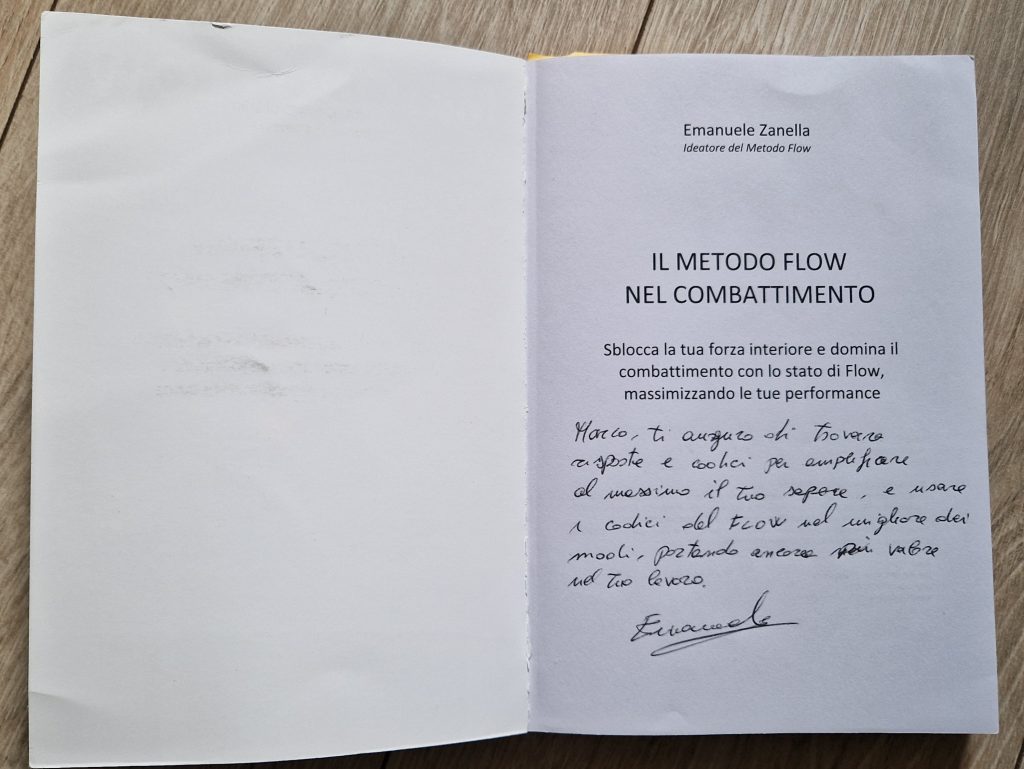
In his book, Emanuele tackles topics that traditional psychology often overlooks, using straightforward language
I personally found the examples Emanuele uses – ranging from famous athletes to legendary film characters – very interesting, and I was particularly struck by Chapter 12, where he defines the meaning of ‘Warrior’ (excerpt follows):
Being a warrior does not simply mean possessing physical strength or striking fear into others. Rather, it implies the ability to express an inner balance between different qualities which, together, give rise to a strong, charismatic and fully conscious presence.
From this perspective, the essence of the warrior arises from the integration of three fundamental energies:
- Tenderness and adaptability, which allow one to remain sensitive, open and flexible in relationships and life’s situations.
- Fierceness, understood as determination, courage and strength in facing obstacles and challenges.
- Playfulness, or the ability to maintain lightness, creativity and a zest for life even in the most demanding moments.
The harmony between these three dimensions helps to create a balanced personality, capable of combining strength, sensitivity and vitality.
Emanuele’s book has been reviewed by someone I hold in particularly high regard: Master Clod, whose interesting article on the concept of self-defence can be read here
Claudio Alberton wrote:
When I read the first few pages, I realised this wasn’t just any old book…
…it isn’t a technical manual, nor is it a collection of techniques… it is a living work, an inner journey…
Emanuele explores what goes on inside the athlete… Each chapter is an invitation to look within…
It has given me new tools to observe myself and my athletes…
This book is not for everyone…
If I had read it twenty years ago, I would have greatly improved my coaching methods.
Words written by an experienced fighter and coach like Master Clod really make you think.
EMANUELE ZANELLA
I’ve been in touch with Emanuele for several years now, and in the past I even tried to invite him to one of the events we organised with the FightZone sports association.
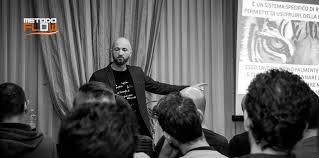
Emanuele is a Coach-Analyst, specialising in enhancing physical and mental performance. He has been working in the sports sector for 25 years and has developed the Flow Method, which enables you to achieve maximum results with minimum effort by tapping into the power of instinct in a natural way. His powerful techniques and effective strategies have enabled his athletes to mentally outclass their opponents, winning the title of champion in many cases.
He has worked with numerous champion athletes such as Cristian Faustino, Domenico Valentino, Claudio Conti, Nicola Severi and many others, helping them to win. (As you can read here)
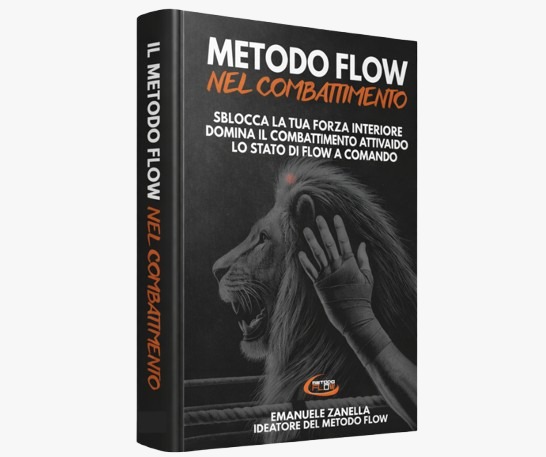
The book is not yet available in English
In the following article, the author, Emanuele Zanella, has summarised the key concepts of the Flow Method; naturally, for a more in-depth understanding, I would recommend reading his book. (not yet available in English)
GOALS AND FLOW: WHY FOCUSING ON WINNING CAN SABOTAGE YOUR PERFORMANCE
Emanuele Zanella
In the world of sports training, there’s a phrase you hear everywhere:
“You have to want to win at all costs.”
It sounds powerful and motivating, but under pressure, this phrase can become a subtle poison.
The culture of performance has taught us that to achieve results, you need clear goals, visualisations, positive self-talk, and mantras repeated in front of the mirror. And in part, this is true: without direction, you won’t get anywhere.
But there is a precise moment when the goal, if you don’t let it go, becomes your worst enemy because it weighs down your mind and disconnects you from your body as you overthink.
A goal is useful… up to a point
Setting a goal is essential during the preparation phase.
It helps you organise your work, push through the fatigue, and maintain discipline.
Do you want to win a tournament?
Perfect. Train with that in mind.
But when you step into the ring, when the action begins… the goal must disappear from your mind, and only your intention must remain, centred on your inner self, and no longer on the outside world.
If, whilst fighting, you keep telling yourself:
- I must win
- I must hit him
- I cannot lose
- I’m doing it wrong
you have already lost your fluidity.
Your nervous system tenses up, your muscles contract, your mind races incessantly and your body becomes predictable.
You start looking for your opponent and winding up your punches, wasting energy for nothing, thereby losing confidence and naturalness, and of course your breath.
THE PARADOX OF PERFORMANCE
There is a rule that few have the courage to voice:
To achieve something, you must stop obsessing over it.
When you cling to the outcome, you create tension; you lose momentum, timing and effectiveness.
The knockout blow is almost never the one you planned; on the contrary, it is the one that arises spontaneously, that is, when it is not premeditated.
At the moment when the body acts without mental interference.
This is Flow.
It is not magic; it is the absence of internal mental noise, also known as the ‘no-mind state’.
EVERY THOUGHT LEAVES A TRACE
Imagine you’re in the ring and you think:
“I’m going to hit him now.”
The very moment you think it:
- Your shoulders tense up.
- Your breathing changes.
- A micro-movement precedes the action.
Your opponent cannot read what even you yourself “write” in your mind.
The rational mind is much slower than the unconscious mind, which is why when you switch it off, the unconscious kicks in and processes actions automatically even before you think them.
When you’re obsessed with the idea of striking, you become slow and predictable.
When you’re in the Flow, you’re invisible because you ‘switch off your mind’ and simply act.
MENTAL NEUTRALITY: THE REAL WEAPON
Now let’s enter a state of neutrality, which doesn’t mean a lack of motivation, but a lack of interference.
You’ve spent months preparing.
You’ve worked hard.
You have a clear goal.
Perfect.
Now forget it and let go of every heavy thought and need.
In the moment of action, you don’t have to win; you just have to be there.
In the gym, your goal isn’t to win; you’re free, and that’s what allows you to perform excellently, unlike when you want to win at all costs in the ring.
Mental neutrality allows you to:
- Not send out readable signals
- Act spontaneously
- Remain fluid under pressure
- Adapt without rigidity
When the mind is full of goals, it feels heavy.
When it is empty, the body feels light.
That is why you must focus solely on yourself and nothing else.
A heavy mind, a heavy body.
A light mind, a swift body.
THE MENTAL FLIP: A PROVOCATIVE TECHNIQUE
This is where we enter the danger zone.
If the goal of winning causes you anxiety, tension and a fear of failure, you can turn it on its head.
I often use this technique with my athletes to dispel the tension and fear of winning.
It’s very simple but effective.
If the need to win and the fear of losing are causing you tension, try saying the opposite;
- I want to lose.
- I want to get it all wrong.
- I want to make a fool of myself.
It’s not self-sabotage, it’s a mental short-circuit.
When you openly state your fears, they lose their power.
When you do this, it is essential to listen to your body’s sensations because that is where you will find the answer.
If you feel your chest, solar plexus or throat opening up and relaxing, you’ve hit the mark.
If the tension melts away, your body relaxes and you find clarity.
Not because you actually want to lose, but because you are no longer a slave to the result.
MENTAL EMPTINESS: AN ELITE STATE
The mediocre fighter fights with a cluttered mind, constantly thinking.
The extraordinary fighter fights with a clear mind.
Not devoid of preparation, but of thoughts, expectations and inner dialogue.
Rational thought is too slow for intuition.
When you think too much:
- You arrive too late.
- You hesitate.
- You correct yourself mid-movement.
- You freeze.
When you act with a clear mind:
- The body chooses.
- The timing is natural.
- The movement is fluid.
- Energy flows without friction.
This is not achieved through motivational phrases, but by eliminating the need.
MOTIVATION OR FREEDOM?
Many fear that neutrality reduces motivation.
That is not the case.
Motivation is needed during preparation.
Neutrality is needed during performance.
Before the match, the goal gives you direction.
During the match, the goal must fade away.
If you fight whilst thinking about the score, the judgement, or victory, you are already fighting two battles:
- One against your opponent
- One against yourself
Flow eliminates the second.
THE TRUE POWER
After nearly twenty years of working with athletes, one thing is clear:
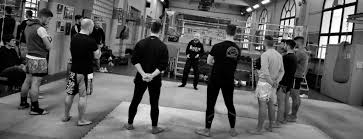
train with all your physical and mental strength, but once you’re in the ring, you must have the mental strength and courage to not care about the result and fight simply for the sake of it.
No athlete fights to lose, take a beating and make a fool of themselves, yet it happens all the time.
When you let go of all your thoughts, everything changes because you free yourself from the need to prove yourself and the fear of making mistakes.
Remember that if you’re not prepared to lose, you’re not ready to win.
Victory is a consequence, not a goal to be pursued during the action.
CONCLUSION: YES TO THE GOAL, BUT AT THE RIGHT TIME
I’m not saying you shouldn’t have goals, because without a direction you’ll lose your way.
But there is a time for building, and a time for letting go.
The real mistake isn’t setting a goal; it’s dragging it into the ring like a ball and chain.
When you have nothing to prove, you truly begin to express who you are, and it is there, in that mental void, that Flow is born.
Not from desire, hunger or obsession, but from the absence of need; because when you are free inside, you become unpredictable and dangerous.
This piece is a preview of my latest book, ‘The Flow Method in Combat’; you can find it in all Italian bookshops.
ADDENDUM – Rocky
As I mentioned at the start, I found the examples Emanuele uses very interesting, but I was particularly struck by his analysis of the film *Rocky III*.
In the book, Emanuele explains the psychology behind Rocky’s downfall. Without hunger and tension, everything loses its value.
A few days ago, I watched the documentary *Sly*, in which Stallone talks about the film *Rocky*.
The deeper meaning of the Rocky saga lies not in boxing, but in the portrayal of human resilience, dignity and the ability to get back up after every fall.
According to Sylvester Stallone, the deeper meaning of the Rocky saga goes far beyond a simple sports story. The story of the boxer from Philadelphia is, above all, a metaphor for personal challenges, dignity and the ability to get back up.
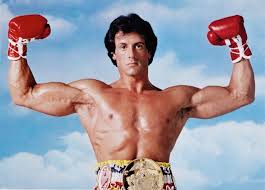
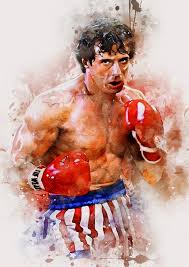
The key messages behind Rocky
True victory lies within
In the first Rocky film, the protagonist does not win the title against Apollo Creed. However, his success does not depend on the outcome of the fight: the real achievement is making it through all fifteen rounds and proving to himself that he is worthy. The message is clear: even those who start at a disadvantage can achieve a personal victory.
The determination not to give up
One of the strongest themes of the saga is perseverance. Difficulties are part of the journey, but with commitment, discipline and willpower, it is possible to face and overcome them.
Authenticity and realism
Sylvester Stallone chose to set the story in the working-class reality of Philadelphia, showcasing the harsh life of the working-class neighbourhoods. This realism helps to create a sort of ‘urban poetry’, made up of hard work, dreams and a desire for redemption.
The value of a second chance
In the film Rocky Balboa, the story also addresses the theme of the passing of time. The protagonist is now getting on in years, but still feels the need to put himself to the test. The film suggests that determination and the desire to give meaning to one’s life have no expiry date.
In short, for Sylvester Stallone, the Rocky saga is above all a story of love, pride and personal redemption, in which boxing simply serves as a symbol of the challenges everyone faces in their own lives.
Sylvester Stallone has stated that the character of Rocky Balboa is not just a role, but a reflection of his own life, his struggle and his perseverance. The story of Rocky was created with the aim of inspiring people to believe in themselves, turning difficulties into victories.